
Reviewed · TURTLE WATCHING
Watch Sea Turtles Nesting – Night Tour in Sal Island
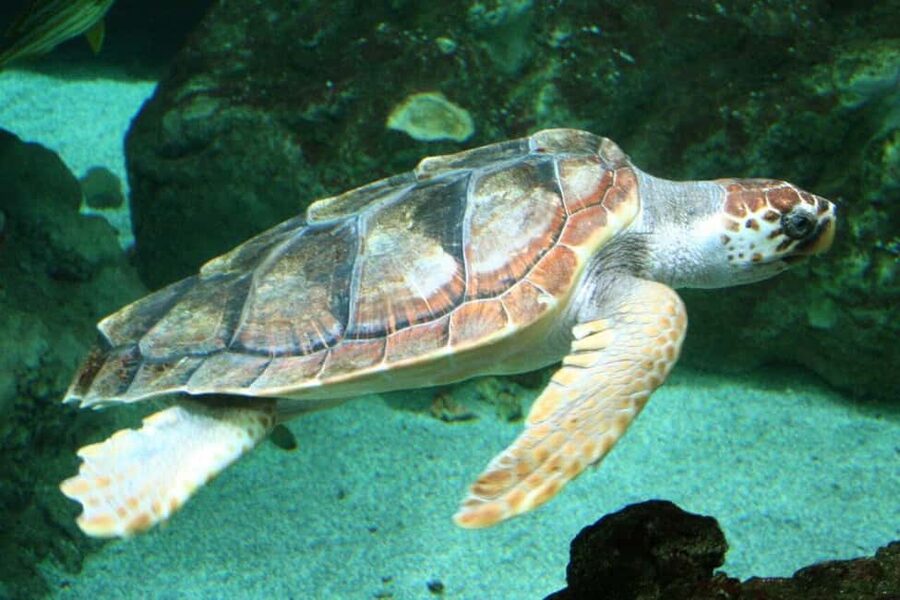
The beach comes alive after dark. Sal’s nighttime turtle tour gives you a rare chance to watch endangered loggerhead turtles crawl ashore, lay their eggs, cover the nest, and return to the sea. Cape Verde is the world’s third-largest loggerhead turtle reserve, after the United States and Oman, so this is not just a beach outing with a lucky animal sighting.
I like the ethical approach and the use of red or infrared lights, which let you see the turtles without shining harsh beams at them. I also like the local conservation angle, since your booking helps support turtle protection and education projects. The main concern is timing: the advertised visit lasts two to three hours, but one recent experience involved pickup at 8:30 p.m. and a return by 10 p.m., with only about an hour on the beach.
That shorter schedule may be fine if a turtle appears quickly. Still, you should book this for the wildlife encounter, not for a guaranteed full evening at the beach. Bring patience, dark clothing, sturdy shoes, and a tolerance for mosquitoes.
In This Review
- Key points to know before you go
- Why Sal’s turtle beaches matter
- From Santa Maria to the protected beach
- Waiting quietly under the night sky
- Watching a loggerhead build her nest
- September and October may add hatchlings
- Group, private, and deluxe choices
- Mosquitoes, clothing, and beach etiquette
- How long should you plan for?
- Is this a good tour for you?
- Should you book the Sal turtle night tour?
- FAQ
- How much does the Sal Island turtle nesting tour cost?
- What is included in the tour?
- Where does the tour pick up?
- How long does the turtle tour last?
- What languages are available?
- Can I use a camera or flashlight?
- Is the tour suitable for people with mobility impairments?
Key points to know before you go
- Sal is one of the world’s top three loggerhead turtle nesting areas, giving this tour real conservation value.
- Turtle sightings have been nearly 100 percent over the past five nesting seasons, though wildlife is never fully predictable.
- Infrared and red lights protect the turtles, so flash photography and regular flashlights are forbidden.
- Pickup and drop-off in Santa Maria are included, with group, private, and deluxe options available.
- The nesting process can last from arrival to return to the sea, but your total tour time may be shorter than the stated two to three hours.
- Mosquitoes are a real nuisance, so cover your arms and legs and follow the operator’s current advice on scent-free repellent.
Why Sal’s turtle beaches matter
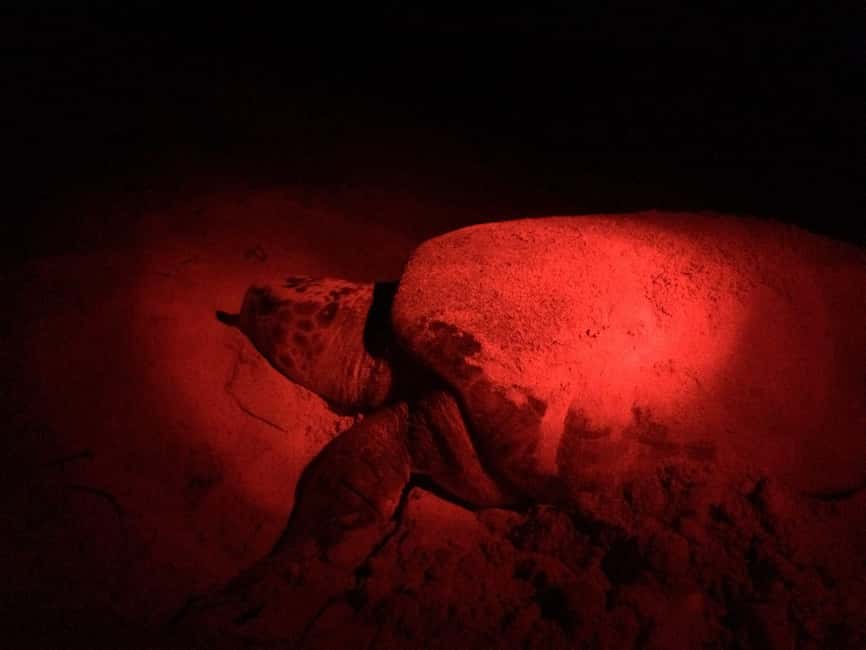
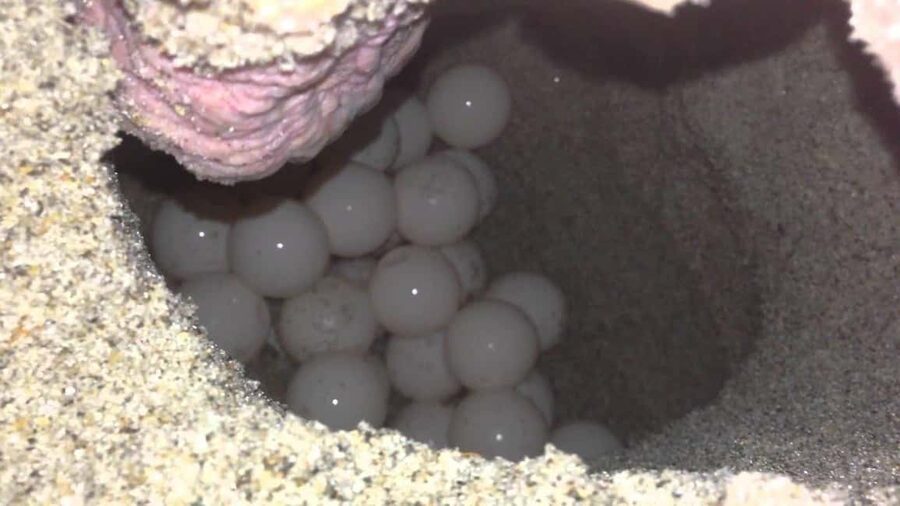
Loggerhead turtles, known scientifically as Caretta caretta, return to sandy beaches to lay their eggs. The female crawls out of the sea, searches for a suitable spot, digs a nest with her rear flippers, deposits the eggs, and then covers the hole with sand. Finally, she makes her slow trip back to the water.
Seeing this process in person is very different from seeing a turtle in an aquarium. The beach is dark and quiet. You hear the surf, wait for movement, and watch a large wild animal carry out a task it has performed for thousands of years.
Sal’s importance comes with a warning. Loggerhead turtles are endangered, and nesting beaches are fragile places. Bright lights, noise, strong smells, litter, and careless footsteps can disrupt the animals or damage hidden nests. That is why this experience has strict rules. They are not fussing for the sake of it. They are part of the activity.
The tour visits a protected beach such as Algodoeiro, Kite Beach, or Serra Negra. The exact beach can vary, so you should not expect to choose your own location. Each site offers the same central reward, a chance to observe nesting turtles in their natural setting, but conditions can vary with the night and the nesting activity.
More Turtle Watching in Sal
- Santa Maria: Sal Island Sea Turtle Watching Experience
★ 4.5 · 256 reviews - Sal: Turtle Nesting with professional local guide
★ 4.7 · 18 reviews - Santa Maria: Sea Turtle Watching Experience on Sal Island
★ 4.0 · 9 reviews
From Santa Maria to the protected beach
The evening begins with hotel pickup in Santa Maria. A short drive takes you away from the resort area and toward one of Sal’s protected nesting beaches. Hotel transportation is included in the group and private options, which makes the tour easier to manage after dark.
Pickup timing deserves some flexibility. One experience involved a 40-minute delay, even though the person was the only passenger in the vehicle. Another outing began with pickup at 8:30 p.m. and returned the participant to the hotel by 10 p.m. I would keep your evening free and avoid booking a late dinner or another activity immediately afterward.
Transfers from Murdeira Village cost extra. The included hotel service is for Santa Maria, so check the transfer arrangement before paying if you are staying elsewhere.
Once you reach the beach, a local guide gives a short introduction. The guaranteed languages are Portuguese and English, with French, Italian, and Spanish also offered when possible. You learn about the turtles, their nesting cycle, and the conservation work taking place on Sal.
This briefing is useful because it gives you a better sense of what to watch for. You are not simply waiting for a turtle-shaped silhouette. You understand why the animal may stop, turn, or crawl back toward the sea without nesting.
Waiting quietly under the night sky
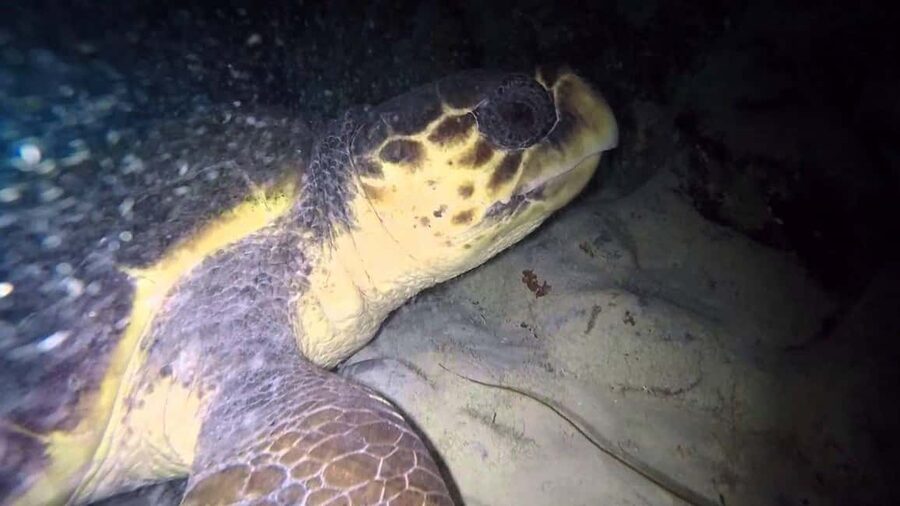
The most unusual part of the tour is also the least active. You wait.
The group moves quietly to the beach, using red or infrared lights rather than bright white beams. Then the guide looks for signs of a turtle emerging from the ocean. Your job is to remain still, keep your voice low, and follow instructions about where to stand.
That quiet wait can feel long, especially if you expect a fast-moving sightseeing stop. It is also what makes the experience feel genuine. The turtle is not brought to you, handled, fed, or trained. You are adjusting to its schedule.
The tour is described as suitable for all ages, but the practical details matter. Children need to stay quiet and follow the guide. Babies and young children may need car seats, which are available on request. The activity is not suitable for wheelchair users or people with mobility impairments because you walk across sand and may need to wait outdoors at night.
Wear closed-toe shoes with a firm sole. Sand is harder to walk across than a normal path, and open sandals offer little protection. A light jacket or cardigan is also sensible, since the beach can feel cool after sunset.
Watching a loggerhead build her nest
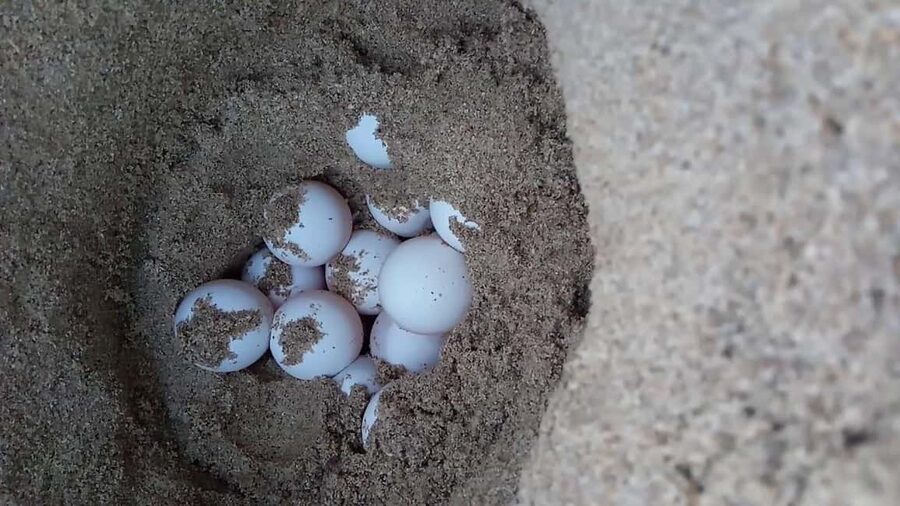
If the conditions line up, you may see the complete nesting sequence. First, the female leaves the water and crawls up the beach. She may spend time searching for the right spot before beginning to dig.
Once she starts, the guide may allow you to watch her use her rear flippers to form the nest chamber. She then lays her eggs, covers them carefully with sand, and smooths the area before heading back toward the sea.
This is the moment when the rules become especially important. Do not use a flash, shine a flashlight, touch the turtle, stand in her path, or make loud noises. Strong perfume, deodorant, scented lotion, alcohol, smoke, and bright clothing are also forbidden. Even a small disturbance can cause a turtle to abandon the nesting attempt.
The infrared lighting is a strong feature. It gives you a closer view without the harsh glare that can disorient a nesting animal. You will not get the bright, perfectly lit photographs common on ordinary excursions, but that is a fair trade. The turtle’s welfare comes first.
A sighting is reported to have been achieved on nearly every tour over the past five nesting seasons. That is a very encouraging record, but you should still treat it as a wildlife experience rather than a theater performance. A turtle might nest quickly, choose a distant part of the beach, or make what is called a false crawl, when she comes ashore but returns without laying eggs.
More Turtle Watching in Santa Maria Cape Verde:
- Santa Maria: Sea Turtle Watching Experience on Sal Island
★ 4.6 · 446 reviews - Boa Vista: Shark, Turtles, Cave, Sandboarding & Tasting Tour
★ 4.8 · 328 reviews - Boavista: Turtle, Shark, Santa Monica, Sandboard & Tasting
★ 4.7 · 228 reviews - From Mindelo: São Vicente’s Enchanting Sea Turtle Snorkeling
★ 4.4 · 153 reviews
September and October may add hatchlings
The main focus is adult turtles nesting. During September and October, you may also see hatchlings moving toward the sea. This is less predictable and depends on the season, timing, and luck.
Watching tiny turtles make their way across the sand can be moving, but the same rules apply. Never touch them, redirect them, use a flashlight, or place personal items in their path. Do not feed any animals, and take every piece of rubbish with you.
A separate baby turtle observation tour is offered, with an optional turtle adoption donation to conservation projects for €10 per person. That is not part of this nighttime nesting tour, so book it separately if hatchlings are your main interest.
Group, private, and deluxe choices
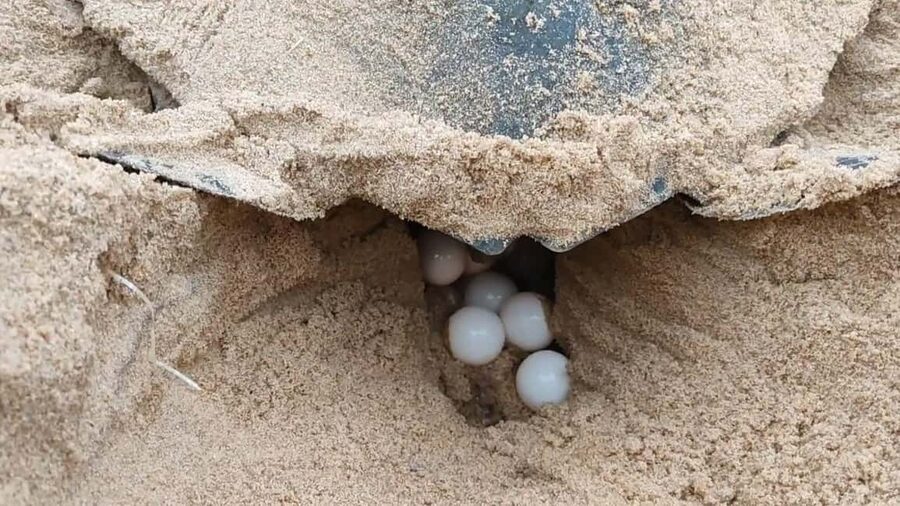
The standard group experience is the sensible choice for most people. You get hotel pickup and drop-off in Santa Maria, a multilingual local guide, the conservation briefing, infrared lights, insurance, and the turtle observation. Small groups help keep the beach calmer and make it easier to hear the guide.
At $46 per person, the group tour is fairly priced if you value the transport, local guiding, and conservation work as well as the sighting itself. You are paying for access to a protected setting and for a guide who knows how to conduct the visit without putting the turtles at risk. That is more meaningful than paying for a simple nighttime drive to a beach.
A private tour gives you a vehicle and guide for your own party. It may suit families, couples, or anyone who wants a more personal pace. The service is described as flexible, and the private option can include soft drinks and snacks at an extra cost. A turtle nesting video souvenir and professional photography are also optional extras.
The deluxe version adds a glamping tent, snacks, and a souvenir video according to the tour description, but the details and extra charges should be confirmed before booking. These additions may appeal to you if you want the evening to feel like a special occasion. They are not necessary for the core experience, which is watching the turtle.
I would not pay for upgrades simply to guarantee a better sighting. No tent, snack, or camera changes the wild nature of the event. Choose private or deluxe for comfort, privacy, and keepsakes, not because the standard tour lacks the essential wildlife moment.
Mosquitoes, clothing, and beach etiquette
Mosquitoes are one of the few practical complaints worth taking seriously. One participant specifically advised covering the arms and legs because the beach was heavily affected by insects.
Wear dark, loose, comfortable clothing. Bright or reflective colors can disturb turtles, while dark clothing helps you blend into the night. Long trousers and a long-sleeved top are the safer choice.
The instructions about repellent need care. You are told to bring biodegradable, scent-free mosquito repellent, but insect repellent, sprays, and aerosols are also listed among the items not allowed. Since strong smells can disturb wildlife, ask the operator which product is acceptable before departure. At minimum, avoid aerosol sprays, perfume, scented lotions, and heavy deodorant.
Do not bring pets, drones, alcohol, drugs, cigarettes, or anything that encourages noise and movement. You should also leave bright phones and ordinary flashlights switched off. The guide’s infrared equipment is there for a reason.
How long should you plan for?
The stated duration is around two to three hours. That includes pickup, the drive, the briefing, walking to the beach, waiting, turtle observation, and the return transfer.
In practice, the evening may be shorter. A recent outing lasted roughly 90 minutes from hotel pickup to return, with about one hour spent at the beach. Another pickup was delayed by 40 minutes. These details do not cancel out the value of the experience, but they do affect your expectations.
I would set aside at least three hours of open time and avoid making firm plans immediately afterward. If the tour runs short, you will have an easy evening back in Santa Maria. If the wait takes longer, you will not be watching the clock while a turtle is trying to nest.
The activity operates every day during the nesting season, including Sundays and holidays. Because spots can fill quickly, booking ahead is sensible, especially if your Sal visit is short.
Is this a good tour for you?
This tour suits you if you enjoy wildlife, can remain quiet for a while, and are comfortable accepting conditions that no guide can control. It is a good fit for couples, families with patient older children, and anyone who wants a meaningful evening away from resort entertainment.
It may not suit you if you need a precise schedule, dislike walking on sand, use a wheelchair, or want guaranteed professional photographs. The beach can be buggy, the lighting is intentionally limited, and the turtle may not perform every stage of the nesting process while you watch.
The conservation rules are a major part of the value. You are not only watching an endangered animal. You are helping fund local protection and education work by taking part in a carefully managed visit.
Should you book the Sal turtle night tour?
I would book it if seeing a loggerhead turtle in the wild is high on your Sal wish list. The reported sighting record is excellent, the guides use non-intrusive lighting, and the experience offers a rare look at nesting behavior that you cannot reproduce in a resort setting.
Book with realistic expectations about time and comfort. Allow for late pickup, carry a light jacket, cover your arms and legs, and confirm the repellent rules. Choose the group option for the best value, or pay extra for private service only if snacks, privacy, a glamping setup, or a video matter to you.
If you can be patient and respectful, this is one of Sal’s most memorable nighttime experiences.
FAQ
How much does the Sal Island turtle nesting tour cost?
The group tour costs $46 per person. Private and deluxe options are available, but their additional prices should be confirmed when booking.
What is included in the tour?
All tour options include hotel pickup and drop-off in Santa Maria, turtle observation at a protected beach, a multilingual local guide, a conservation briefing, infrared lights, a small group setting, liability insurance, and child or infant seats on request.
Where does the tour pick up?
Hotel pickup and drop-off are included for Santa Maria. Transfers from Murdeira Village are available for an extra cost.
How long does the turtle tour last?
The expected duration is around two to three hours, including transfers and the beach visit. Actual outings can be shorter, so keep your evening schedule flexible.
What languages are available?
English and Portuguese are guaranteed. French, Italian, and Spanish are available wherever possible.
Can I use a camera or flashlight?
Flash photography and regular flashlight use are not allowed. Infrared lights are provided for non-intrusive observation.
Is the tour suitable for people with mobility impairments?
No. The activity is not suitable for wheelchair users or people with mobility impairments because it involves walking on sand and waiting on the beach.
Recently listed on Santa Maria Cape Verde
- Windsurf Lessons★ 5.0 · 2 reviews
- Sal: Small Group Island Tour & Lunch with a Local Family★ 4.4 · 3 reviews
- Sal: Romantic Sunset Escape with Wine and Roundtrip Transfer★ 4.3 · 3 reviews
- Sal Island: Santa Maria Snorkelling★ 4.2 · 5 reviews
- Postcards of Boa Vista 4×4 Tour with Shipwreck & Local Lunch★ 4.5 · 4 reviews
- Boa Vista Full Day 4×4 Island Tour with Beachfront Lunch★ 3.5 · 4 reviews
- Santa Maria: Half-Day Diving Trip in Sal with Pickup★ 4.7 · 6 reviews
- Half Day 4×4 Tour with Viana Desert and Villages★ 4.1 · 8 reviews
Turtle Watching, compared.

Shark, Turtles, Cave, Sandboarding & Tasting Tour
Read our review →
Turtle, Shark, Santa Monica, Sandboard & Tasting
Read our review →
Beautiful Beaches, Turtles & Djeu Island Snorkel
Read our review →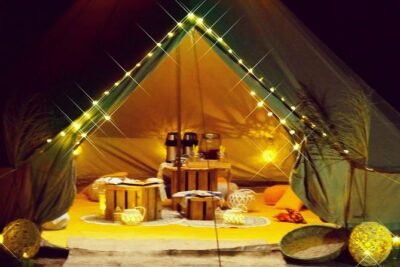
Browse the lists this tour appears in