
Reviewed · TURTLE WATCHING
Santa Maria: Sal Island Sea Turtle Watching Experience
Night brings the beach to life. This three-hour Sal excursion gives you a rare look at sea turtles nesting, laying eggs, covering their nests, and returning to the Atlantic. I especially like the small groups of up to 10 people and the chance to learn directly from trained guides and biologists. I also like that turtle welfare comes first, with red lights, silence, and strict rules against touching animals or using flash photography.
The main thing to consider is patience. You may wait an hour or more while guides search the beach for activity, and sightings can never be guaranteed. The advertised timing also varies: pickup information mentions 8 PM, while the practical notes say the activity may run from 7 PM to 11 PM. Confirm your exact pickup time before you go.
In This Review
- Key points before you book
- Why Sal is important for nesting turtles
- From Santa Maria hotels to a quiet beach
- Santa Maria orientation and the route to Kite Beach
- What happens when a turtle reaches the sand
- The guides make the difference
- A conservation lesson, not a petting experience
- The waiting is part of the price
- What can make the evening frustrating
- Who will enjoy this most
- What to bring for a better experience
- Should you book the Sal turtle tour?
- FAQ
- How long does the sea turtle tour last?
- Where does the tour take place?
- Is hotel pickup included?
- What languages are available?
- How many people are in each group?
- Is seeing a turtle guaranteed?
- Can I take photographs during the tour?
Key points before you book
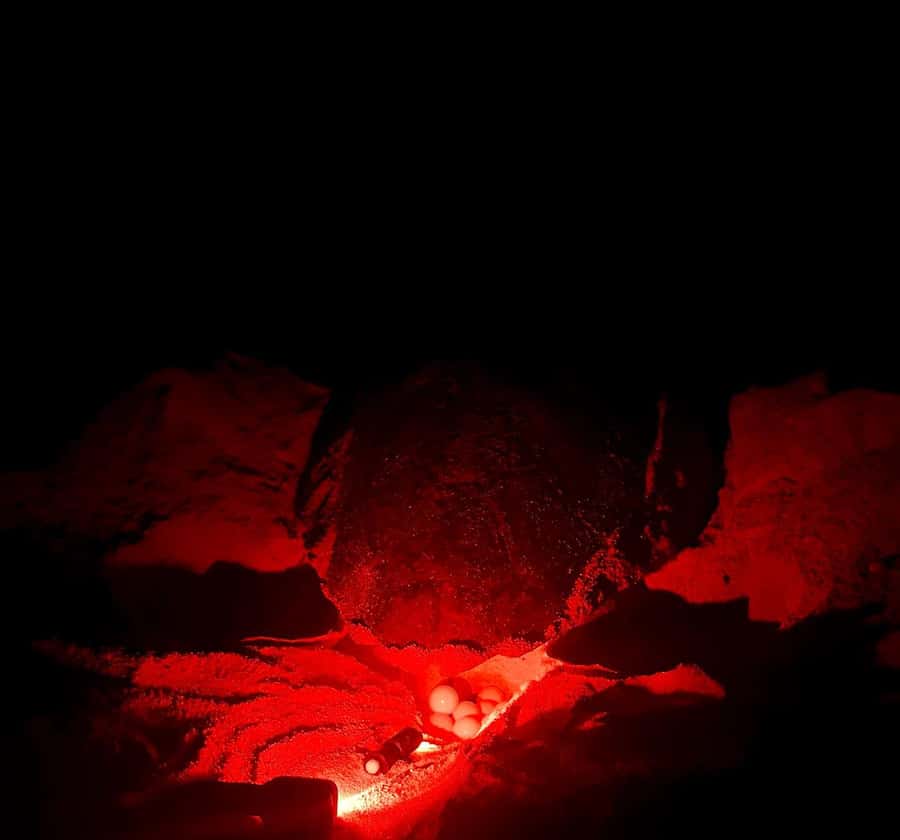
- You may see the full nesting cycle: lucky groups have watched adult turtles lay eggs, hide the nest, return to the sea, and baby turtles hatch.
- Kite Beach is the main viewing area: the tour includes about two hours there, usually after a short guided portion in Santa Maria.
- Conservation rules are serious: red lights replace white light, silence matters, and touching turtles is forbidden.
- The group is limited to 10 people: this helps keep the beach calmer, though several groups may sometimes be nearby.
- Hotel pickup is included: air-conditioned transport connects many Santa Maria hotels and resorts with the nesting beach.
- The price is modest for a specialist outing: at $37 per person, it is among the lower-cost ways to see nesting turtles on Sal.
Why Sal is important for nesting turtles
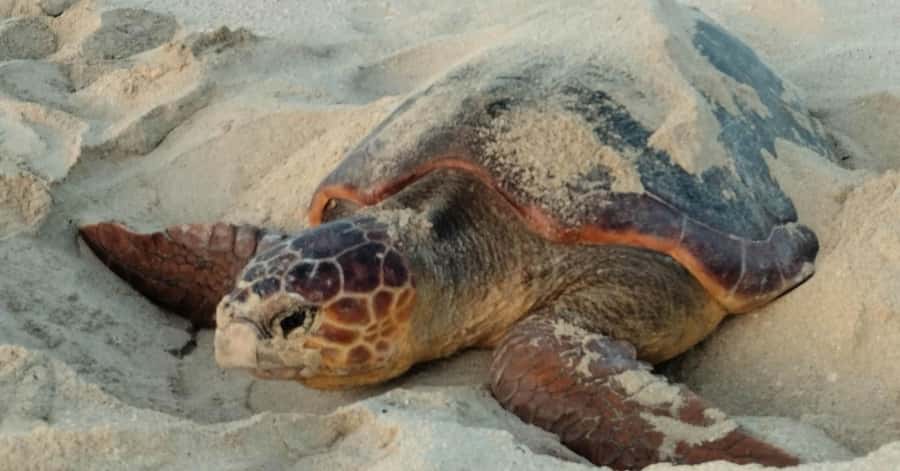
Sal’s broad sandy beaches are important nesting grounds for the common turtle, also called the yellow turtle. Cape Verde is home to three turtle species, but this is the one you are most likely to encounter during the tour.
The evening timing is not a gimmick. Adult turtles come ashore after dark, and the lack of daylight helps them move toward the sand with less disturbance. Your guide explains the turtle’s evolution, traits, nesting behavior, and the reasons conservation work matters across the island.
I like that the experience is not just a quick animal sighting. You learn how the process works from the turtle’s arrival at the shoreline through egg laying, covering the nest, and the return to the water. If you also see hatchlings, you get the other end of the story as tiny turtles make their way from the sand to the sea.
More Turtle Watching in Sal
- Sal: Turtle Nesting with professional local guide
★ 4.7 · 18 reviews - Watch Sea Turtles Nesting – Night Tour in Sal Island
★ 4.1 · 14 reviews - Santa Maria: Sea Turtle Watching Experience on Sal Island
★ 4.0 · 9 reviews
From Santa Maria hotels to a quiet beach
Pickup is available from a long list of accommodations and meeting points around Santa Maria. These include Hotel Morabeza, Hotel MiraBela, Hotel Riu Cabo Verde, Meliá Dunas, Riu Funana, Hilton Cabo Verde Sal Resort, Robinson Cabo Verde, The Budha Beach Hotel, Hotel Riu Palace Santa Maria, and several others.
You are collected at reception when staying at an included hotel. Santa Maria Beach and Restaurant Santa Maria are also listed among the pickup points, which helps if you are staying outside one of the larger resorts.
The ride takes less than an hour to reach a more isolated beach. The vehicle is air-conditioned, a useful comfort on an evening outing after a warm day on Sal. Since food and drinks are not included, eat beforehand and bring water if permitted by the operator. Alcohol is not allowed in the vehicle.
One practical point deserves attention: the schedule is not perfectly consistent in the supplied details. The main timing says three hours, while the additional information says the activity starts at 7 PM and usually ends at 11 PM. Another section gives an 8 PM pickup. I would check the exact start time and expected return when booking, especially if you have a dinner reservation or an early excursion the next morning.
Santa Maria orientation and the route to Kite Beach
The itinerary lists about 45 minutes of guided time in Santa Maria before the main beach watch. This portion helps set the scene and gives your guide a chance to explain turtle behavior before you reach the nesting area.
The main stop is Kite Beach, where you spend roughly two hours. The beach itself is not presented as a sightseeing stop with shops or facilities. Its value is its quiet, open sand and its role as a nesting site.
You may not walk straight from the vehicle to a turtle. Guides can first check different sections of the beach, and the group may move to another site if activity is not found. One evening described in the supplied material included an initial stop, a wait of more than an hour, and then a move to another place where turtles were found.
That may sound disorganized if you expect a fixed show. It is actually part of the nature of the experience. The animals choose the time and place, not the schedule. Still, the guides should explain what is happening, and clear communication makes the waiting easier.
What happens when a turtle reaches the sand
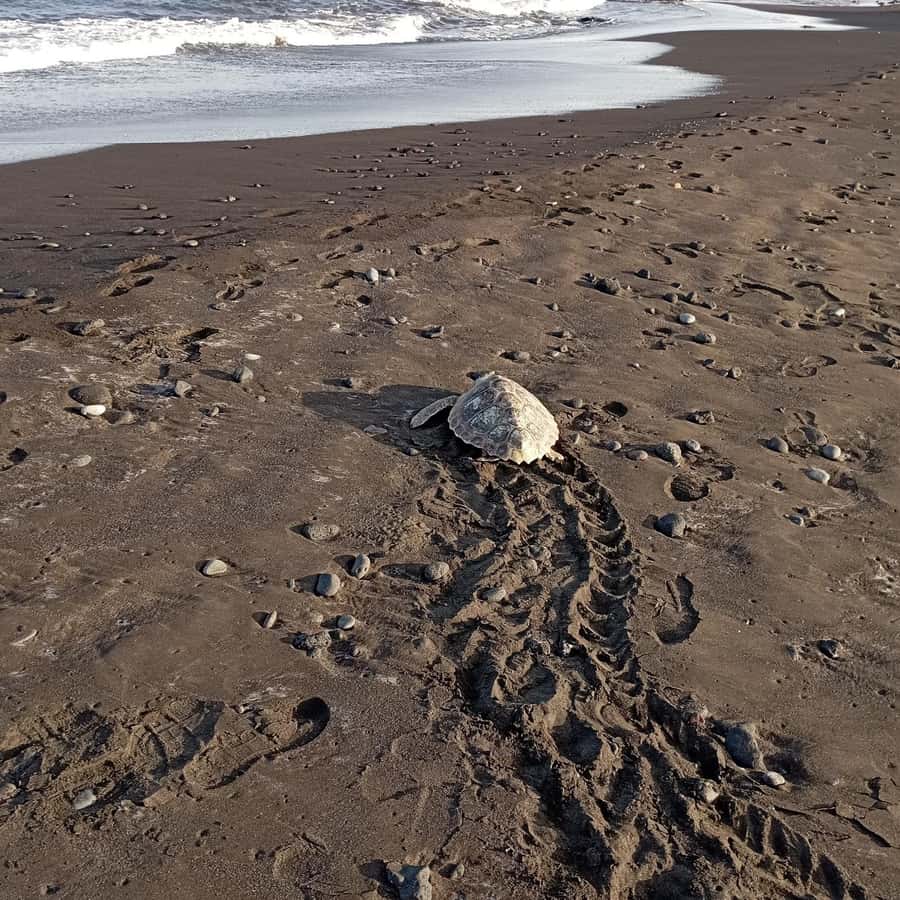
When a turtle comes ashore, the group walks quietly along the beach and waits for the guide’s instructions. If the turtle starts nesting, you sit down and remain as still and silent as possible.
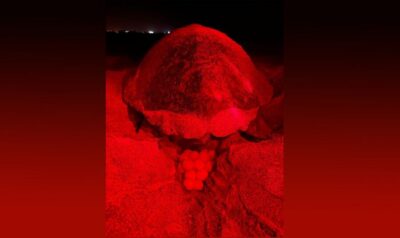
A typical sequence can include the turtle moving above the tide line, preparing a nest, laying eggs, and covering the hole with sand. The guide may use a red light so the turtle is not distracted by bright white light. Flash photography is prohibited, and you must not touch the animal.
The best moments are slow ones. A turtle may pause, shift position, or take time to cover the nest carefully. You need to accept that this is a wild animal carrying out a natural task, not a performance arranged for the group.
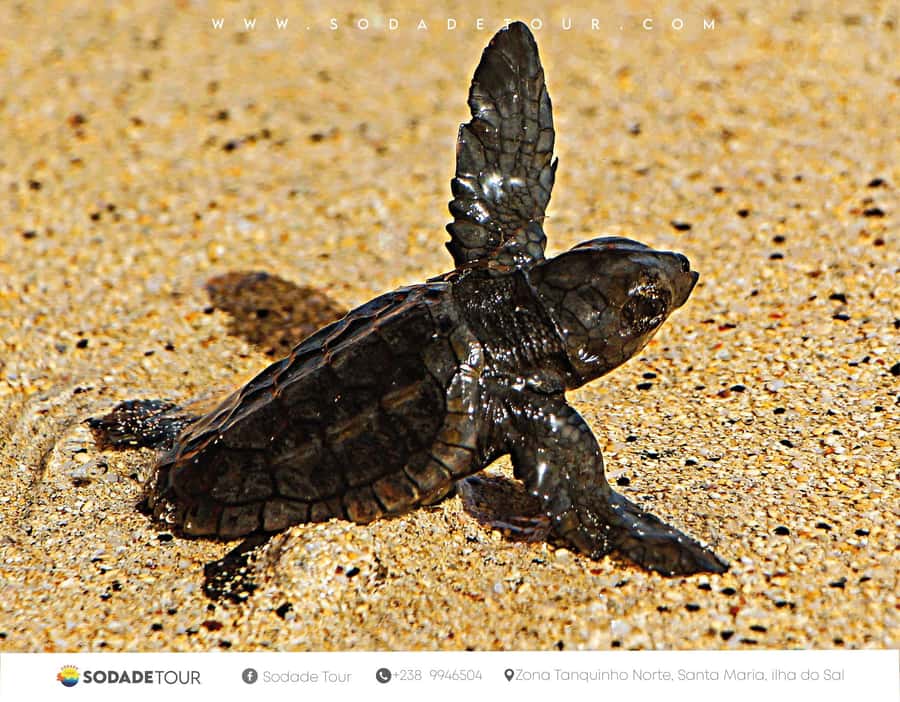
Some outings have included both an adult turtle laying eggs and hatchlings leaving the nest. Seeing baby turtles hurry toward the ocean is a powerful sight, but it is not guaranteed. Your chances depend on timing, weather, and natural activity on that particular night.
More Turtle Watching in Santa Maria Cape Verde:
- Santa Maria: Sea Turtle Watching Experience on Sal Island
★ 4.6 · 446 reviews - Boa Vista: Shark, Turtles, Cave, Sandboarding & Tasting Tour
★ 4.8 · 328 reviews - Boavista: Turtle, Shark, Santa Monica, Sandboard & Tasting
★ 4.7 · 228 reviews - From Mindelo: São Vicente’s Enchanting Sea Turtle Snorkeling
★ 4.4 · 153 reviews
The guides make the difference
The experience includes a professional local guide, and the strongest part of the outing is the human explanation around the wildlife. You can ask about the nesting process, the turtles’ characteristics, and why protecting them is a priority on Sal.
Languages offered are Portuguese, English, French, and Italian. This is useful in a small multilingual group, though explanations may need to be repeated or divided by language. One English-speaking participant was well supported even while the rest of the group spoke other languages.
Guide names associated with the experience include Johnny Cash, Sousa, and Anastassi Salsa. The individual guide can shape the evening. Sousa and his daughter were praised for treating the turtles with care while also looking after the group, and Anastassi Salsa was singled out for clear information and concern for the animals.
You should also expect a mix of walking, waiting, and short transfers. Guides may patrol the beach while looking for signs of movement. If nothing happens at one location, they may take you elsewhere. That search is less polished than a fixed attraction, but it gives the outing a genuine wildlife feel.
A conservation lesson, not a petting experience
The rules are there for a reason. No touching animals, no flash photography, no littering, and no smoking in the vehicle or indoors. Alcoholic drinks and drugs are forbidden, and alcohol cannot be carried for use in the vehicle.
The required packing list includes comfortable shoes, comfortable clothing, a camera, biodegradable sunscreen, biodegradable insect repellent, and a garbage bag. The bag is a small but telling detail: you are expected to leave the beach clean.
Biodegradable products matter because the nesting beach is a living habitat. Regular sunscreen and insect repellent can add unnecessary pollution, while rubbish can harm animals. Wear shoes suitable for walking on sand and clothes that let you sit comfortably for a long wait.
The beach is dark, so do not bring a powerful torch and use it freely. Follow the guide’s lighting instructions. The point is to watch without changing the turtle’s behavior.
The waiting is part of the price
At $37 per person, this is good value if you care more about a real wildlife encounter than a tightly timed attraction. The price includes the guide, hotel transfer, fuel, taxes, and service charges. You do not need to arrange a taxi to a remote beach, which adds useful value.
The low price does not guarantee a sighting. You are paying for transport, access, local guidance, and a responsible chance to observe nesting activity. Some evenings may bring a turtle laying eggs. Others may bring hatchlings. Some may involve a long wait before anything appears.
I would compare the cost with your expectations. If you need a guaranteed animal encounter, this is the wrong kind of tour. If you can sit quietly under the night sky and accept that nature sets the timetable, the price is easy to justify.
One particularly nice detail is that the experience may not use all three hours for constant turtle watching. After the wildlife activity, the guide can explain more about turtles, and you may have time to appreciate the stars above the dark beach. The night sky becomes part of the outing rather than empty time.
What can make the evening frustrating
The biggest drawback is waiting without much explanation. At one point, a group spent more than an hour on the beach while guides searched for activity. Another account described guides walking up and down before finding hatchlings.
You should bring patience and avoid booking this on a night when you need to return at an exact time. The tour can also involve moving between sites, which means the experience may feel less orderly than the short itinerary suggests.
There is a second issue: several groups may be present in the same area. One participant felt there were too many people, although the guides worked to give the turtles space. A limit of 10 people per group is helpful, but it does not necessarily mean your group will be alone on the beach.
Multilingual guiding can also slow the pace. The tour is offered in four languages, and explanations may be given more than once. That is better than missing the information, but it can make the evening feel uneven.
Still, the conservation approach earns trust. The use of red lights, the insistence on silence, and the ban on touching animals show that the guides understand the limits of wildlife watching.
Who will enjoy this most
I would choose this tour if you are interested in ecology, animal behavior, or conservation. It suits adults, couples, families with older children, and anyone who is happy to wait quietly for a special sight.
It is also a strong choice if you want an experience beyond the usual beach day in Santa Maria. You are not simply looking at a turtle from a distance. With luck, you can watch the nesting process from beginning to end.
I would think twice if you need step-free access, use a wheelchair, or have a visual impairment. The activity is not suitable for wheelchair users or visually impaired people. Baby strollers, electric wheelchairs, smoking, alcohol, and drugs are not permitted.
You should also skip it if you dislike sitting on sand, walking at night, or waiting without a guaranteed result. This is not a quick photo stop. It is a quiet nature outing with uncertain timing.
What to bring for a better experience
Keep your packing simple:
- Comfortable shoes for walking on sand
- Loose, comfortable clothes
- A camera without flash
- Biodegradable sunscreen
- Biodegradable insect repellent
- A garbage bag
- Any permitted drinking water you need
Do not bring alcohol into the vehicle. Leave flash equipment, bright lights, and anything that could encourage you to touch the animals at home.
A camera is welcome, but the best photograph may be one you take without disturbing the scene. If the guide asks you to stop moving or dim a light, do it immediately.
Free cancellation is available up to 24 hours before the experience for a full refund, and you can reserve now while paying later. Those terms help if your Sal plans are still shifting, but they do not change the need to confirm the pickup hour.
Should you book the Sal turtle tour?
Book it if you want a low-cost, conservation-minded wildlife experience and can be patient. The chance to see an adult turtle lay eggs, cover the nest, and return to the ocean is unusual and memorable. Hatchlings may appear too, giving you a glimpse of the nesting cycle from both ends.
I would not book it for a guaranteed sighting or a tightly controlled schedule. The beach search can take time, group numbers may feel larger than expected, and the exact start and finish times need checking.
For $37, included transport and a small group make this a sensible choice for many visitors staying in Santa Maria. Pack lightly, follow the red-light and silence rules, and let the turtle decide how the evening unfolds.
FAQ
How long does the sea turtle tour last?
The activity is advertised as three hours. Additional timing information says it may start at 7 PM and usually finish around 11 PM, while pickup details mention 8 PM. Confirm the exact schedule before departure.
Where does the tour take place?
The main wildlife stop is Kite Beach on Sal Island. You also receive guided time in Santa Maria before or around the beach portion.
Is hotel pickup included?
Yes. Pickup and drop-off are included from many Santa Maria hotels, resorts, beaches, and meeting points. Collection is made at the accommodation reception when applicable.
What languages are available?
Live guiding is available in Portuguese, English, French, and Italian.
How many people are in each group?
The tour uses small groups limited to 10 participants. Other groups may sometimes be present at the beach.
Is seeing a turtle guaranteed?
No. Turtle activity is natural and varies by night. You might see an adult nesting, hatchlings reaching the ocean, both, or spend a long period waiting while guides search for activity.
Can I take photographs during the tour?
You may bring a camera, but flash photography is not allowed. Follow the guide’s lighting instructions and do not use bright light that could disturb the turtles.
Recently listed on Santa Maria Cape Verde
- Windsurf Lessons★ 5.0 · 2 reviews
- Sal: Small Group Island Tour & Lunch with a Local Family★ 4.4 · 3 reviews
- Sal: Romantic Sunset Escape with Wine and Roundtrip Transfer★ 4.3 · 3 reviews
- Sal Island: Santa Maria Snorkelling★ 4.2 · 5 reviews
- Postcards of Boa Vista 4×4 Tour with Shipwreck & Local Lunch★ 4.5 · 4 reviews
- Boa Vista Full Day 4×4 Island Tour with Beachfront Lunch★ 3.5 · 4 reviews
- Santa Maria: Half-Day Diving Trip in Sal with Pickup★ 4.7 · 6 reviews
- Half Day 4×4 Tour with Viana Desert and Villages★ 4.1 · 8 reviews
Turtle Watching, compared.
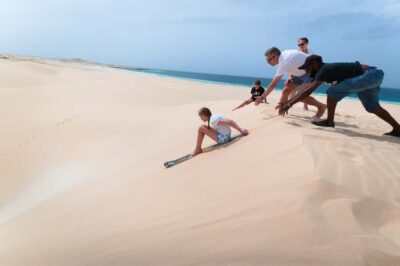
Shark, Turtles, Cave, Sandboarding & Tasting Tour
Read our review →
Turtle, Shark, Santa Monica, Sandboard & Tasting
Read our review →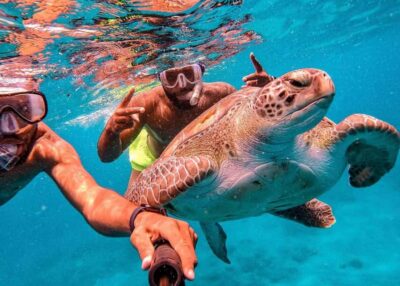
Beautiful Beaches, Turtles & Djeu Island Snorkel
Read our review →
Browse the lists this tour appears in