
Reviewed · TURTLE WATCHING
Turtle Watching Adventure
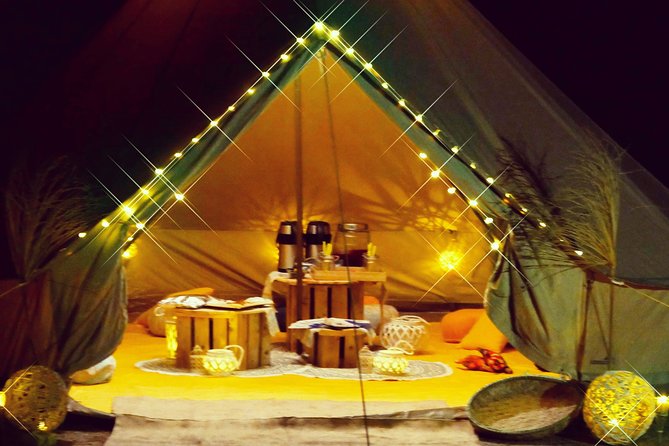
Nature keeps its own clock here. On Sal Island, this three-hour evening trip takes you to a nesting beach where loggerhead sea turtles come ashore to lay their eggs. You begin in an open glamping tent with drinks, bottled water, snacks, and a clear briefing before walking the beach beneath the stars.
I like the small groups of up to 10, which make it easier to keep noise and movement under control. I also like the careful use of red lights and the guides’ focus on watching turtles only when they are already laying eggs. The main drawback is that sightings depend on wild animals and patience, while the beach walk takes place at night on sand.
The price is $45.36 per person, a fair amount for hotel pickup, a private group setting, guides, refreshments, and a rare wildlife encounter. Just bring insect bite cream, wear shoes suited to sand, and do not expect a fast-moving sightseeing tour.
In This Review
- Key points at a glance
- Why Sal Island is a good place for turtle watching
- The evening begins with pickup from Santa Maria
- A gentle briefing inside the open glamping tent
- Walking the beach under a starry African sky
- The turtle sighting depends on patience
- Guides make the difference
- What the private, small-group format really means
- Price, timing, and practical value
- What to pack for a more comfortable night
- Who should book this turtle experience?
- Should you book the Turtle Watching Adventure?
- FAQ
- Where does the Turtle Watching Adventure take place?
- How long does the experience last?
- Are hotel pickups available?
- How many people can join the tour?
- What is included?
- What happens if the tour is canceled because of weather?
Key points at a glance
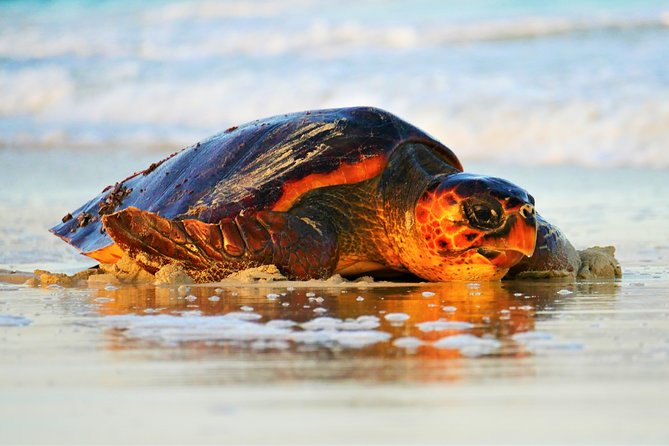
- Loggerhead turtles in their natural nesting area: Watch the turtles come from the sea, make a nest, lay eggs, and return to the water if the timing works in your favor.
- A calm start in an open glamping tent: The introductory talk takes place beside the beach, with drinks, bottled water, and light snacks.
- Red lights protect the animals: The beach walk and turtle approach are planned to reduce disturbance during this sensitive moment.
- Small private groups: Your own booking group takes part, with a maximum group size of 10 people.
- Several language options: Guides may offer the experience in multiple languages, though it is wise to confirm your preferred language clearly.
- A strong record of satisfaction: The tour holds a 4.8 rating from 98 reviews, with 97 percent recommending it.
Why Sal Island is a good place for turtle watching

Sal is known for sun, sand, and water sports, but its beaches also provide nesting ground for loggerhead turtles. At night, the turtles leave the ocean and crawl onto the sand to begin the slow work of reproduction.
That setting gives this activity a different feel from a standard wildlife outing. You are not visiting an enclosure or watching animals on a fixed schedule. You are waiting at the edge of a living habitat and allowing the turtle to decide what happens next.
This is important to understand before booking. You may see a turtle emerge from the water soon after arriving, or you may spend much of the evening waiting. One outing produced sightings of several turtles, while another group saw a turtle almost immediately. Both outcomes fit the nature of the activity.
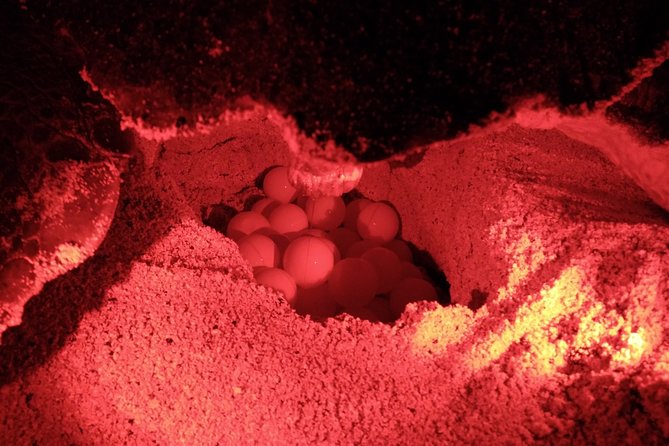
The possibility of seeing egg laying, a turtle building its nest, or hatchlings makes the evening especially memorable. One account describes two turtles laying eggs, followed by the release of small turtles. That is an unusual occurrence, not a guaranteed part of every departure, but it shows how much the night can offer when the timing is right.
More Turtle Watching in Sal
- Private Turtle Watching Experience
★ 5.0 · 12 reviews - Turtle Experience in Sal island
★ 4.0 · 5 reviews - Sea Turtle Nesting Observation on Sal Island
★ 5.0 · 2 reviews
The evening begins with pickup from Santa Maria
Pickup is offered, making this easier to add to a stay in Santa Maria. The transfer is fairly short. One account describes roughly 20 minutes on the bus before arriving at the beach tent.
The transport has one practical weakness: the bus may have limited legroom. If you are tall or carrying extra beach gear, keep your belongings compact and expect a basic transfer rather than a roomy coach ride.
The evening timing matters. This is not a daytime beach walk followed by a quick animal sighting. You leave after dark, and the journey sets up a slow, quiet night outside. Pickup details and the exact start time should be confirmed when your booking is accepted, since confirmation is sent within 48 hours and depends on availability.
A gentle briefing inside the open glamping tent
The first stop is an open glamping tent on the beach. It gives you a place to sit, settle in, and learn how the evening will work before heading onto the sand.
The briefing covers turtle conduct and explains how to behave near the animals. This is not a minor introduction. It is the part of the outing that helps protect the turtles and makes the later sighting more rewarding. You learn why you must stay quiet, keep your distance, avoid bright phone screens and flashes, and follow the guide’s instructions.
The tent also provides drinks, bottled water, and snacks. The refreshment service is useful, though modest. One person found the snack portion disappointing, describing it as little packets of peanuts. Think of the food as a small welcome rather than a meal, and eat beforehand if you need something substantial.
The tent can be especially pleasant when the wind picks up on the beach. One evening included a fairy-lit setting and refreshments before the walk, creating a comfortable contrast with the dark shore outside. You should still bring a light layer, since coastal wind can make the wait feel cooler than expected.
Walking the beach under a starry African sky
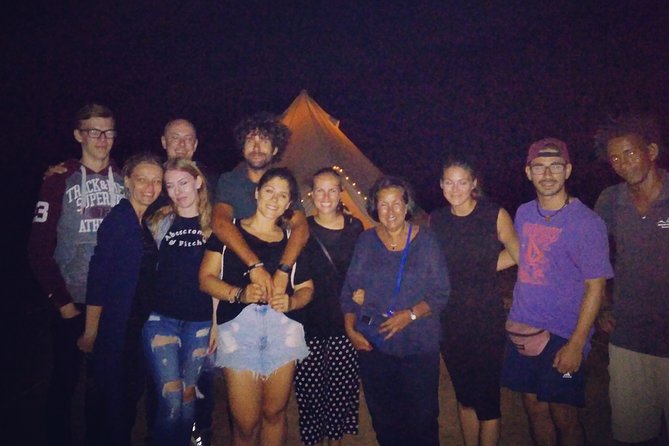
After the briefing, the group walks along the beach using red lights. The color is chosen to reduce disturbance, and the low-light setting adds to the sense that you are entering the turtles’ world rather than bringing a bright human spectacle to it.
The walk itself is part of the experience. You may be moving quietly along dark sand, listening to instructions, and waiting for word that a turtle has been spotted. This calls for moderate physical fitness, as stated by the operator, and you should be comfortable walking on loose sand in low light.
Do not treat the walk as a photo opportunity. A phone flash can disrupt the animals, and loud conversation can spoil the moment for everyone nearby. One account describes a participant using a phone light, speaking loudly, and moving too close to a turtle. That kind of behavior is precisely why the briefing matters and why the guide must control the group firmly.
I would keep your phone put away until the guide says photography is acceptable. Bring only what you need, since loose bags and extra equipment are awkward on the beach.
More Turtle Watching in Santa Maria:
- Santa Maria: Sea Turtle Watching Experience on Sal Island
★ 4.6 · 446 reviews - Boa Vista: Shark, Turtles, Cave, Sandboarding & Tasting Tour
★ 4.8 · 328 reviews - Santa Maria: Sal Island Sea Turtle Watching Experience
★ 4.5 · 256 reviews - Boavista: Turtle, Shark, Santa Monica, Sandboard & Tasting
★ 4.7 · 228 reviews
The turtle sighting depends on patience
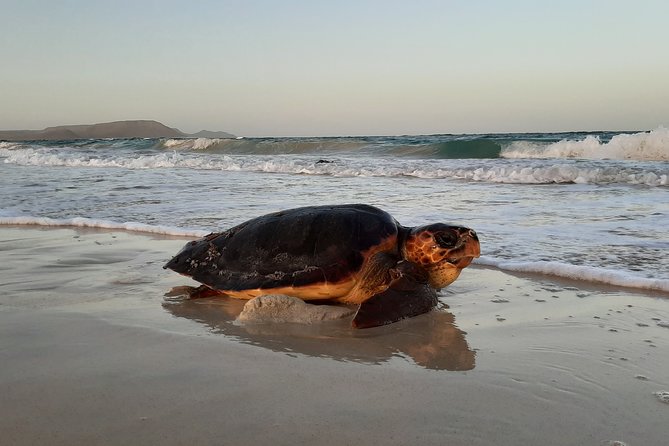
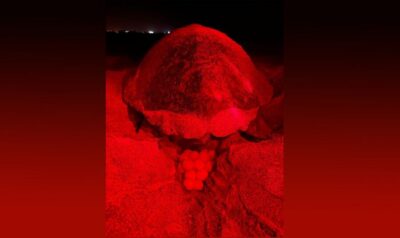
The best moment comes when a turtle has finished the most vulnerable part of its arrival. The guide waits until the animal is already laying eggs before allowing the group to approach. This is a thoughtful rule because a turtle that is still searching for a nesting place can be frightened away by noise or movement.
You might see the turtle crawl from the sea, find a spot, dig a nest, and begin laying. You may then watch from a respectful position as the process continues. Eventually, the turtle covers the nest and makes its way back toward the water.
The pace is slow. You cannot hurry the animal, and the guide cannot promise how many turtles will appear. The strongest moments come from quiet observation, not constant action. One group saw seven turtles, while another arrived just as a turtle was laying eggs. Those are fortunate outcomes, but even one undisturbed turtle can make the evening worthwhile.
The night sky is another part of the setting. Reports describe beautiful beaches, stars, and even a supermoon during one outing. These details cannot be scheduled, but they add a memorable sense of place to the wait.
Guides make the difference
The guides receive some of the highest praise in the feedback. Marta is singled out for clear advice, good communication, and helping people get the most from the evening. Jay is described as well informed about turtles and quick to locate one soon after arrival. Kenny and Adilson are also named in connection with a family outing.
The guide’s role is more than pointing out wildlife. A good guide must manage the group, explain turtle behavior, choose when to approach, and stop people from getting too close. The best comments focus on the team’s respect for nature as much as on the turtles themselves.
Language is worth checking before you confirm. The activity is offered in multiple languages, and one guide gave explanations in both German and English. However, a Spanish-speaking participant found that the tour was conducted in English and Portuguese instead of Spanish. The operator’s response indicates that guides may speak Spanish, English, and Portuguese, but the language arrangement should be made clear at the start.
If language is important to you, contact the provider before booking and confirm that the briefing and beach instructions will be understandable to everyone in your group.
What the private, small-group format really means
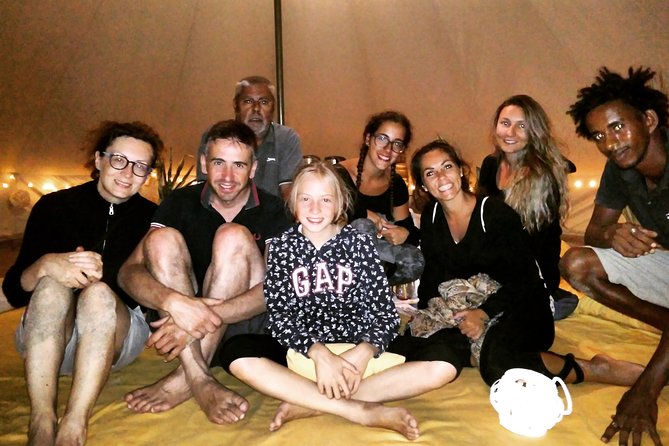
The tour is private, so only your booking group participates in the activity. The listed maximum is 10 people, which gives the guide a manageable group to supervise in the dark.
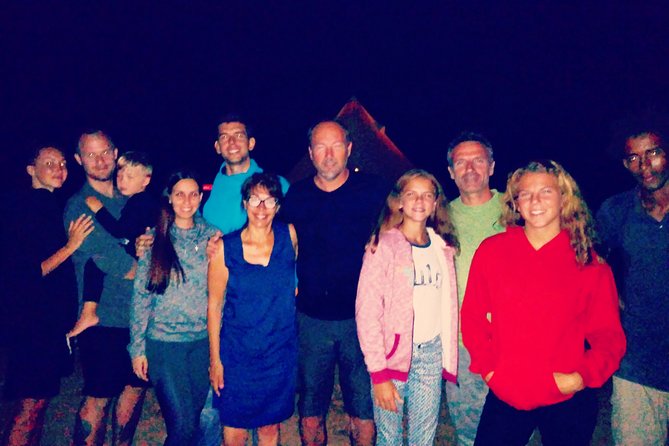
Private does not necessarily mean you will have an entire beach to yourself. One account noticed several groups in the area, with turtles active on different parts of the shore. The important benefit is that your own group stays together and receives direct guidance, rather than being part of a large crowd.
For families, the format can work well. A family of six enjoyed the experience with guides who handled the evening and made the activity feel special. Still, children need to understand that this is a quiet wildlife outing. Running, loud talking, bright screens, and impatience are not suitable near nesting turtles.
The private format also suits couples, small families, and friends who want a shared evening without being placed in a large excursion group.
Price, timing, and practical value
At $45.36 per person, the price is reasonable for a three-hour evening that includes pickup, a guide, refreshments, and access to a carefully managed turtle-watching setting. You are paying for the organization and conservation-minded conduct as much as for the sighting itself.
The value is strongest if you care about wildlife and are willing to accept uncertainty. It is weaker if you need guaranteed animal sightings, a full meal, comfortable transport, or a packed schedule of activities.
The activity is booked, on average, about 30 days ahead. That suggests you should reserve early during busy periods, especially if your holiday dates are fixed. Confirmation arrives within 48 hours, subject to availability.
Free cancellation is available up to 24 hours before the local start time. Changes or cancellations inside that window are not refunded. The outing also needs good weather and a minimum number of participants. If weather or numbers force cancellation, you are offered another date or a full refund.
What to pack for a more comfortable night
Keep your packing simple, but do not arrive unprepared. I would bring:
- Comfortable shoes that can handle loose sand
- A light layer for wind
- Insect bite cream
- Water beyond the included bottle if you tend to drink often
- A phone with the flash disabled, used only when the guide permits it
- Minimal luggage for the transfer and beach walk
The bite cream tip comes directly from the practical side of the experience. Beaches at night can bring insects, and one person specifically wished they had protection.
You should also eat before pickup. Snacks are supplied, but they may be limited to simple items such as peanuts. If you have a peanut allergy or dietary needs, ask what is available before departure.
Who should book this turtle experience?
I would recommend it to anyone who values a quiet wildlife encounter and understands that nature does not perform on demand. It is a strong choice for couples, families with patient older children, and small groups looking for something more distinctive than another evening in Santa Maria.
It is also a good fit if you care about animal welfare. The red lights, limited group size, briefing, and rule about approaching only after egg laying all point toward a more careful style of wildlife viewing.
I would think twice if you dislike walking on sand, find night outings uncomfortable, or want a guaranteed close-up sighting. The moderate fitness requirement is worth taking seriously, and the waiting can feel long if you expect constant activity.
The outing is not built around luxury food or polished transport. The tent is attractive and comfortable enough for the introduction, but the bus may be cramped and the snacks basic. Its value comes from the setting, the guides, and the chance to witness an endangered animal behaving naturally.
Should you book the Turtle Watching Adventure?
Yes, if you can be patient and follow instructions. A 4.8 rating from 98 reviews and a 97 percent recommendation rate support the strong impression created by the guide quality, respectful approach, and memorable turtle sightings.
Book it early if this is a priority during your Sal stay. Confirm the operating language, prepare for a dark beach walk, and bring insect protection. Most of all, accept that the turtle decides the schedule. That is not a flaw in the tour. It is the reason the experience feels real.
FAQ
Where does the Turtle Watching Adventure take place?
The experience takes place in Santa Maria, on Sal Island in Cape Verde, with turtle watching along a beach used by loggerhead sea turtles for nesting.
How long does the experience last?
The activity lasts approximately three hours, including the welcome and briefing at the glamping tent, the beach walk, and the turtle-watching period.
Are hotel pickups available?
Yes. Pickup is offered, and one account describes a transfer of about 20 minutes to the beach area.
How many people can join the tour?
The group size is limited to a maximum of 10 people. It is described as a private activity, meaning only your booking group participates.
What is included?
Drinks, bottled water, and snacks are provided during the introductory briefing in the open glamping tent. Pickup is also offered.
What happens if the tour is canceled because of weather?
If poor weather causes the activity to be canceled, you can choose a different date or receive a full refund. The experience may also be canceled if the minimum number of participants is not reached.
Recently listed on Santa Maria
- Secrets of Sal Island 4×4 Tour with Pedra da Lume Salt Lake★ 4.5 · 6 reviews
- Turtle Experience in Sal island★ 4.0 · 5 reviews
- Private Sal island: Pedra de Lume Village, Salt Lake & Shark Tour★ 5.0 · 2 reviews
- Sal island: Private Santa Maria City Tour, Street Art and Tapas★ 5.0 · 6 reviews
- Sal Island All-inclusive Adults-only Catamaran Cruise★ 5.0 · 3 reviews
- Sal Island: Guided Full-Day Highlights Tour with Lunch★ 5.0 · 5 reviews
- 4×4 Off Road Full-Day Private Tour – Sal Island Hidden Secrets★ 5.0 · 3 reviews
- Sea Turtle Nesting Observation on Sal Island★ 5.0 · 2 reviews
Turtle Watching, compared.

Shark, Turtles, Cave, Sandboarding & Tasting Tour
Read our review →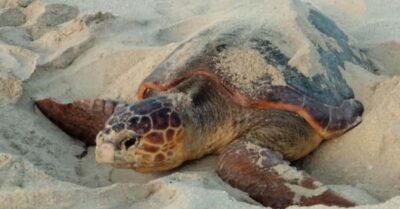
Turtle, Shark, Santa Monica, Sandboard & Tasting
Read our review →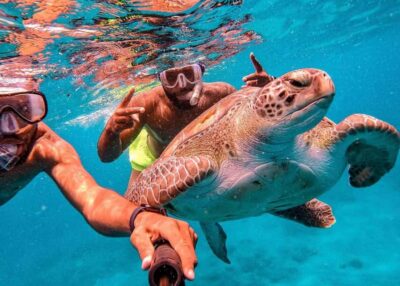
Beautiful Beaches, Turtles & Djeu Island Snorkel
Read our review →
Browse the lists this tour appears in