
Reviewed · CITY TOURS
Tour Old City/Discover Old Town
Old stones tell Cape Verde’s biggest story. This private tour from Praia takes you to Cidade Velha, the former Ribeira Grande and the first Portuguese city in Africa. I like the compact historical route, which links a fortress, cathedral ruins, churches, a convent, and the old pillory in about two to three hours. I also like the private transportation, since your group can move at its own pace rather than follow a large coach.
The main caution is that the service can feel less polished than the history deserves. One group had trouble finding the pickup because there was no promised welcome sign, and four people were squeezed into a small sedan. The tour is advertised as a short visit, but one booking expected roughly five hours and finished in about two and a half.
In This Review
- Key points to know before booking
- Why Cidade Velha matters to Cape Verde
- Starting at Fortaleza Real de San Felipe
- Seeing the ruins of Sé Catedral
- Igreja Nossa Senhora do Rosário and Father António Vieira
- The Pelourinho and the hard truth of the square
- Convento de São Francisco and the city’s decline
- What the private ride is really worth
- The guide can shape the whole experience
- Who will like this short Cidade Velha visit
- Should you book Tour Old City?
- FAQ
- Where does Tour Old City take place?
- How long does the tour last?
- What sites are visited?
- Is transportation included?
- Are entrance fees included?
- What is the cancellation policy?
Key points to know before booking
- Cidade Velha connects several major Cape Verde sites in one short outing, making this a useful introduction to Santiago’s colonial past.
- Fortaleza Real de San Felipe gives you the broadest setting, with views toward the old city and the sea.
- The Pelourinho is powerful but uncomfortable history, because this municipal monument was also a place where enslaved people were publicly punished.
- Nelson has earned praise for warmth, humor, pacing, and lunch advice, though the quality of the guiding may depend on who handles your visit.
- The $29.60 price is reasonable for private transport, especially for a small group, but confirm the expected duration and vehicle before setting out.
- Free cancellation is available up to 24 hours before departure, while poor weather can lead to a new date or full refund.
Why Cidade Velha matters to Cape Verde
Cidade Velha is more than an old quarter with attractive ruins. It was once called Ribeira Grande and served as the capital of the Cape Verde archipelago for centuries. The Portuguese established their first city in Africa here, making this small settlement a key point in the story of Atlantic exploration, trade, religion, and slavery.
Its position on Santiago mattered. The island sat between Africa, Europe, the Americas, and the East, so ships could use Ribeira Grande for supplies of fresh food and water. Trade helped the settlement grow into a commercial center, and in 1533 it received city status.
That success did not last. Attacks, storms, changing trade patterns, and years of neglect left much of the city in ruins. Today, the remaining walls and monuments sit above the sea, offering a direct look at both Cape Verde’s importance and the cost of its colonial past.
I appreciate that this tour does not treat Cidade Velha as a simple postcard stop. The sites bring up difficult subjects, especially slavery and forced labor. You will see beauty here, but you will also see reminders of violence and exploitation.
More City Tours in Santiago
- Praia & Cidade Velha: Guided City Tour
★ 4.8 · 80 reviews - Praia: Baobab Mysterious Tree, Green Valley & Old City Hike
★ 4.8 · 53 reviews - Private Tour Cidade Velha/Discover OLD CITY
★ 5.0 · 4 reviews
Starting at Fortaleza Real de San Felipe
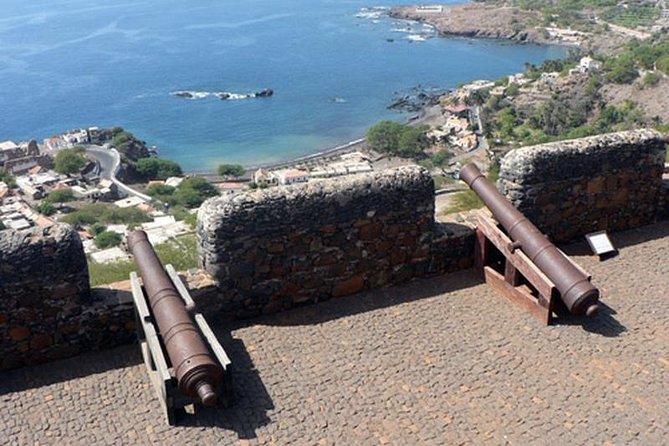
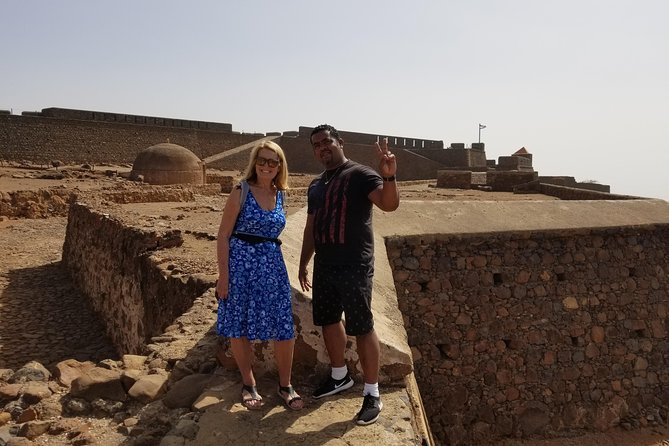
Fortaleza Real de San Felipe is the first major stop and usually receives about an hour. It was built after the attack by Sir Francis Drake in 1585, with construction beginning in 1593. The fort helped defend and control Ribeira Grande, and it remains one of the clearest reminders of Portuguese military power on Santiago.
This is the stop where the setting does much of the work. From the fortress area, you can connect the high defensive position with the old city below and the open sea beyond it. I would take your time here, since the fort offers the best chance to understand why Ribeira Grande was placed where it was.
The fort also helps explain the difference between a trading settlement and a true colonial capital. The Portuguese needed protection for the city, its stores, its religious buildings, and the ships calling at the island. The walls were not decorative. They were a response to raids and competition across the Atlantic.
The description of the stop also refers to the old pillory in the city square. That transition matters, because the fort represents defense and authority, while the pillory shows how that authority was imposed on ordinary people and enslaved people.
Admission to the fortress is not included in the $29.60 price. Since all fees and taxes are listed separately, ask your provider what payment may be needed on the day. This is a small but important point when you are keeping to a travel budget.
Seeing the ruins of Sé Catedral
Sé Catedral receives about 30 minutes, and admission is free. The cathedral was the first one built by the Portuguese on the African continent, but only part of the structure remains. Preservation work aims to keep the surviving pieces from disappearing completely.
Do not expect a complete church with an intact interior. The appeal is in reading the remaining walls and imagining the role this building once played in a growing colonial city. Ribeira Grande became an important religious center as well as a place for trade and shipping.
The cathedral also reflects the unusual position of Santiago. Cape Verde’s early culture developed through contact among African communities, Portuguese settlers, clergy, merchants, sailors, and enslaved people. The church was part of that system, so this stop is best understood as both a religious site and a sign of colonial organization.
Half an hour is enough for a focused look, especially if your driver provides context. If you want a long, detailed architectural study, the short tour may feel rushed. You can make the most of the stop by looking closely at the surviving stonework rather than expecting a long indoor visit.
Igreja Nossa Senhora do Rosário and Father António Vieira
The Church of Our Lady of the Rosary is one of the oldest temples on Santiago and in Cape Verde. It was built around 1495 and is now protected as a historical site. The scheduled visit lasts about 30 minutes and is free.
The church is especially interesting because Father António Vieira preached here in 1652 while traveling from Portugal to Brazil. He was a major Portuguese speaker of his time and reportedly admired the education and ability of the clergy and canons he encountered in Ribeira Grande.
That detail gives the church a human connection. You are not only looking at old walls and religious decoration. You are standing in a place where ideas, sermons, and political messages passed through a city tied to Atlantic trade.
I would listen carefully to the explanation here, since the building itself may not tell the full story. The value comes from connecting the church to the people who used it and to the wider role of Cidade Velha as a meeting point between continents.
The stop is also a reminder that religious institutions had a complicated place in colonial society. Churches offered worship and education, but they also operated inside a system shaped by Portuguese authority and slavery. That tension is worth keeping in mind as you move through the old city.
A few more Praia trips to put side by side
- Santiago: Landscapes, Street Art, and Markets Day Trip
★ 4.8 · 316 reviews - From Port of Praia: Island Tour for Cruise Ship passengers
★ 4.5 · 190 reviews - Serra Malagueta: Principal Valley Hike & Lunch with Locals
★ 4.7 · 64 reviews - Santiago: Calabaceira Valley Trek & Visit to Cidade Velha
★ 4.8 · 49 reviews
The Pelourinho and the hard truth of the square
The Pelourinho is perhaps the most direct symbol of the old city’s municipal power. This white marble Manueline column was built around 1512 or 1520 and restored in the late 1960s. It sits in the main square and is one of the oldest surviving monuments in Cape Verde.
Its appearance can seem elegant. Its purpose was not. The pillory was a public place where rebellious enslaved people were punished. That contrast makes this a short but serious stop.
I would not rush past it for a better photograph. The column helps you understand how law and government worked in the colonial city, and how public punishment was used to enforce the slave system. It is one of the few places on the route where the machinery of oppression is especially visible.
Cidade Velha’s historic center became a UNESCO World Heritage Site in 2009. That status recognizes the town’s global importance, but it does not make the past comfortable. The best visit allows both ideas to remain present: this was an important early Atlantic city, and it was also part of a brutal trade in human beings.
Admission is free, and the stop takes about 30 minutes. Because it is located in the city’s main square, it also helps you orient yourself among the surrounding historic buildings.
Convento de São Francisco and the city’s decline
The final listed stop is the Convento de São Francisco, built around 1640 on land donated by Joana Coelho, a wealthy landowner and widow of Captain Fabião de Andrade. The convent housed Franciscan religious figures who replaced the Jesuits in the Cape Verde mission.
It also served as a training center. Priests taught different crafts to local people, so the convent was connected to practical education as well as religious life. That makes it a useful counterpoint to the cathedral and church, which focus more directly on worship and public faith.
The convent was badly damaged after an attack by the privateer Jacques Cassard in 1712. A storm in 1754 caused further destruction. Those events help explain why Cidade Velha is a town of fragments rather than a preserved colonial center.
You may find the convent less immediately impressive than the fortress or pillory. Its importance comes from the story attached to the remains. If the guide gives clear context, the half-hour visit adds another layer to the history of education, religion, and the city’s decline.
What the private ride is really worth
At $29.60 per person, this experience can offer good value if you are traveling with one or more companions and want private transport from Praia. Your group is the only group participating, and pickup is offered. That saves you from arranging separate transportation to Cidade Velha and trying to connect the sites on your own.
The price does not include all fees and taxes, so you should confirm any entrance costs before departure. The fortress is specifically listed as having an admission charge, while the cathedral, church, pillory, and convent are listed as free.
The advertised duration is approximately two to three hours. That is a sensible length for the five main sites, particularly if you want an introduction rather than a full-day study tour. Still, one booking expected a longer half-day and finished after about two and a half hours, then was asked to pay more for additional activities.
My advice is simple: treat this as a short Cidade Velha orientation, not an open-ended Santiago excursion. If you want extra stops, lunch, or a longer island visit, agree on the plan and any additional cost before you leave Praia.
The private format can also create a comfort issue. A group of four was placed in a small sedan, which made the ride cramped. Ask what vehicle will be used if your party has four people or carries bags. Private does not always mean spacious.
The guide can shape the whole experience
The strongest praise is directed at Nelson, who is described as warm, funny, well-paced, and helpful. He also recommended a good place for lunch at the end of the visit. Those personal touches matter in Cidade Velha, where a short explanation can turn a ruined wall into a meaningful historical stop.
A good guide should help you connect the sites rather than simply point at them. The route makes more sense when Fortaleza Real de San Felipe is linked to the city’s defense, the cathedral to colonial religion, the pillory to slavery, and the convent to education and decline.
At the same time, the service appears inconsistent. One group had difficulty locating the driver because the expected welcome sign was missing. Another found the visit shorter and less informative than expected. I would confirm the meeting point, look for the vehicle description, and keep the provider’s contact details available on the morning of the tour.
The provider is Águia Tours CV. Confirmation is issued at booking, and the activity is private. Service animals are allowed, and the tour is near public transportation. Most people can participate, but the vehicle issue is worth discussing if comfort is important to you.
Who will like this short Cidade Velha visit
I would recommend this tour to you if you want a straightforward introduction to Santiago’s oldest major settlement, especially if you are staying in Praia and prefer private transport. The compact schedule works well for a first look at the fortress, religious ruins, pillory, and convent.
It also suits people who prefer a small group and a personal guide. The best version of the experience appears to be warm and relaxed, with time to ask questions and perhaps receive a lunch suggestion from the driver.
You may want a different arrangement if you expect five hours, a large comfortable vehicle, or a detailed island tour. The published timing is two to three hours, and the basic package does not promise extra activities. History fans may also prefer to arrange more time in Cidade Velha so they can linger at the ruins.
Because the visit requires good weather, a cancellation caused by poor conditions can be moved to another date or refunded. You can cancel for a full refund up to 24 hours before the start time. Changes or cancellations inside that window are not refunded.
Should you book Tour Old City?
Book it if you want the main Cidade Velha landmarks gathered into a short private outing at a modest price. The route is historically important, the admission costs at most stops are free, and Nelson’s warm approach can make the visit especially enjoyable when he is your driver-guide.
Book with care if you need a roomy car, a promised half-day, or a tightly managed pickup. Confirm the meeting point, vehicle size, exact length, and any extra fees before departure. For a focused introduction to Cape Verde’s first Portuguese city, this is a worthwhile option. Just keep your expectations matched to the advertised two to three hours.
FAQ
Where does Tour Old City take place?
The experience takes place in Praia, Cape Verde, with visits to Cidade Velha, also known historically as Ribeira Grande, on Santiago Island.
How long does the tour last?
The advertised duration is approximately two to three hours. One booking finished after about two and a half hours, so you should not assume the outing will last five hours.
What sites are visited?
The route includes Fortaleza Real de San Felipe, Sé Catedral, Igreja Nossa Senhora do Rosário, the Pelourinho, and Convento de São Francisco.
Is transportation included?
Private transportation is included, and pickup is offered. The activity is private, so only your group participates.
Are entrance fees included?
All fees and taxes are not included. The fortress lists an admission charge, while Sé Catedral, Igreja Nossa Senhora do Rosário, the Pelourinho, and Convento de São Francisco list free admission.
What is the cancellation policy?
You can cancel up to 24 hours before the start time for a full refund. Cancellations or changes made less than 24 hours before departure are not refunded or accepted. If poor weather causes the tour to be canceled, you will be offered another date or a full refund.
Recently listed on Praia
- Santiago Island: Private Airport Transfer to Praia or Vice Versa★ 5.0 · 3 reviews
- Hiking Águas Belas Cave★ 4.5 · 3 reviews
- Best of Santiago Island: Cidade Velha, Workshop & Tarrafal Beach Tour★ 4.5 · 3 reviews
- Santiago island & Full Day Island★ 5.0 · 2 reviews
- Santiago Island: Trek from Serra Malagueta to Rabelados Community★ 5.0 · 2 reviews
- Tarrafal Beach Tour: Boat Trip to the Lighthouse, Snorkel & BBQ Lunch★ 5.0 · 5 reviews
- Like Locals: Banana Plantation, and Cuscuz with locals★ 5.0 · 6 reviews
- Hiking Serra Malagueta Natural Park★ 5.0 · 2 reviews
City Tours, compared.
Espargos City Tour, Local Life, and Cape Verde Tapas
Read our review →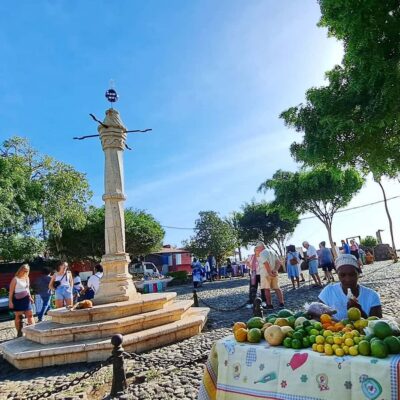
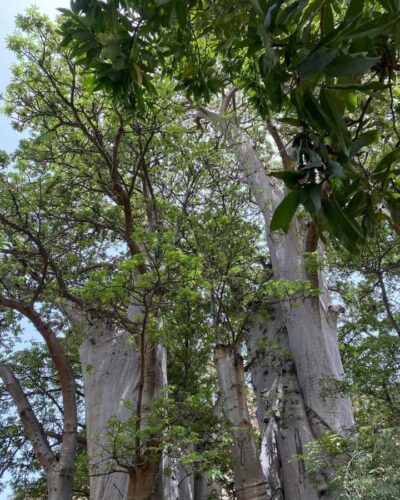
Baobab Mysterious Tree, Green Valley & Old City Hike
Read our review →
Santa Maria City Tour & Cuscuz Tasting with a Local Family
Read our review →
Espargos city tour, Local life and Cape Verde Tapas
Read our review →Browse the lists this tour appears in