
Reviewed · LOCAL LIFE & CULTURE
Like Locals: Banana Plantation, and Cuscuz with locals
Cape Verde tastes better beyond Praia. This half-day outing takes you from the capital to Santa Cruz’s banana and coconut fields, then into São Lourenço dos Órgãos for a family cooking session built around cuscuz and fidjós. You also see how public transport fits into daily life and learn about local plants, sugarcane, and rum-making.
I like the small group of no more than eight, since that gives your guide room to answer questions and keep the day personal. I also like the time spent with a local family, especially Mama Luisa and Gustavo, who welcome you into their home and show you how to prepare two Cape Verdean foods. The main consideration is that the plantation visit may not include a chance to speak directly with a farmer, so the agricultural stop is more of a guided walk than a working farm visit.
In This Review
- Five things to know before you go
- From Praia to Santa Cruz in 30 minutes
- Walking through Santa Cruz’s banana and coconut fields
- São Lourenço dos Órgãos and the welcome from Mama Luisa and Gustavo
- Rum, sugarcane, and the flavor of Santiago
- What the public transport element adds
- The return through rocks and valleys
- Is $76.57 a fair price?
- Who will enjoy this four-hour outing?
- Should you book it?
- FAQ
- Where does the tour start?
- How long does the experience last?
- What places does the tour visit?
- Is transportation included?
- How large is the group?
- What food activities are included?
- Is lunch included?
- Can I try rum during the tour?
- What is the cancellation policy?
Five things to know before you go
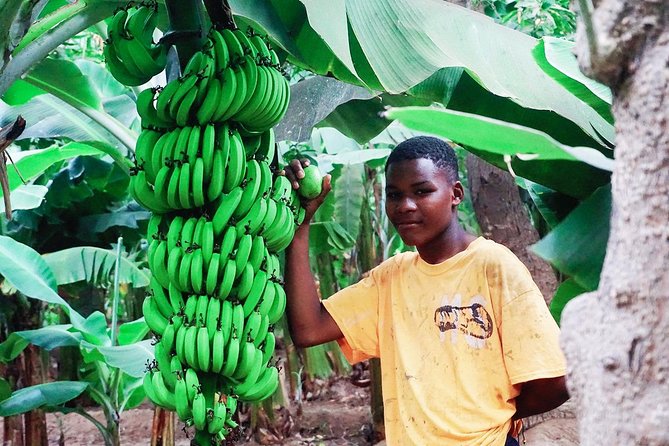
- Santa Cruz has Cape Verde’s largest banana and coconut plantation, with a guided walk among fruit trees and other useful plants.
- The family cooking workshop is the heart of the day, with hands-on preparation of cuscuz and fidjós.
- You see local life from public transport, rather than spending every minute in a private tourist vehicle.
- A rum distillery visit includes tastings and sugarcane products, adding a taste of Cape Verde’s traditional drink-making.
- The $76.57 price covers transport, pickup, guiding, breakfast, and the workshop, but not lunch or personal purchases.
From Praia to Santa Cruz in 30 minutes
Your day begins with pickup at your accommodation in Praia at 9:00 a.m. The drive inland takes about 30 minutes and gives you a quick change of scenery from the capital’s streets to the agricultural interior of Santiago.
That short transfer matters. You are not spending half the tour sitting in a vehicle, yet you still get beyond Praia and see a part of the island that many short-stay visitors miss. The return trip follows another scenic route through rocks and valleys, with your guide explaining local history along the way.
The tour includes transportation, so you do not need to arrange a separate taxi to Santa Cruz or São Lourenço dos Órgãos. Pickup and drop-off are also included, which makes the price easier to understand for anyone staying in Praia.
One feature worth noting is the use of public transport as part of the local experience. The exact transport details are not set out in advance, but the idea is clear: you get a look at ordinary movement around the island instead of seeing only the polished side of tourism. If you enjoy watching daily routines and learning how places function, this adds useful context.
More Local Life Tours in Santiago
- Serra Malagueta: Principal Valley Hike & Lunch with Locals
★ 4.7 · 64 reviews - Like Locals: Praia and Cidade Velha Tour + Local Pontxi Tasting
★ 5.0 · 19 reviews - Praia: Guided Historic Walking Tour & Lunch with Locals
★ 3.8 · 9 reviews
Walking through Santa Cruz’s banana and coconut fields
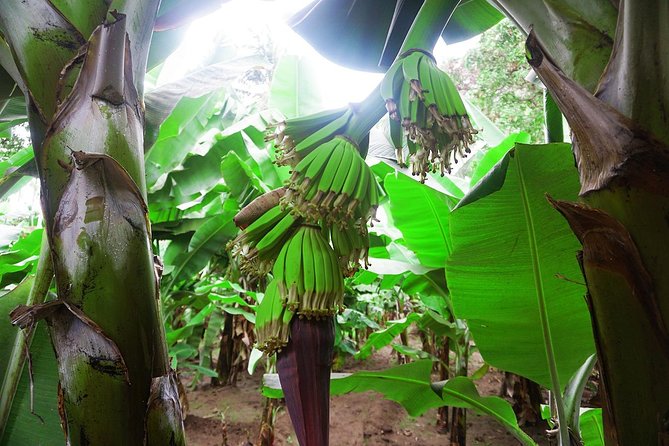
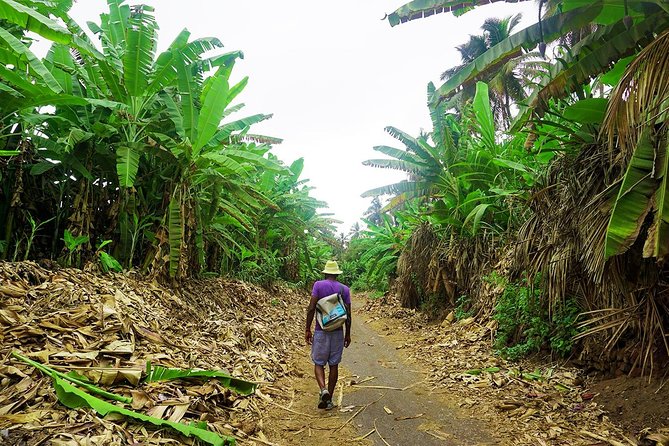
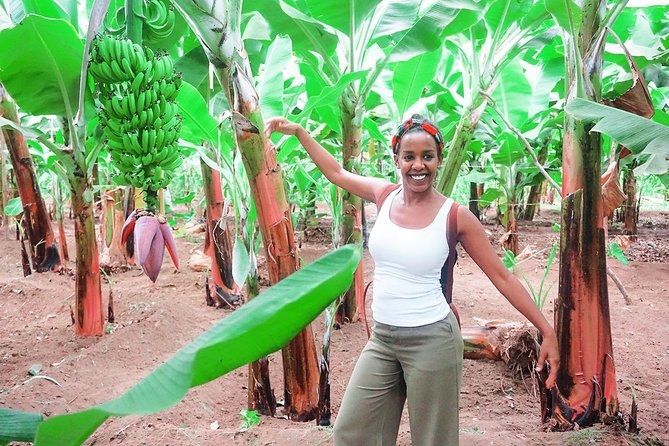
The first main stop is Santa Cruz, home to the country’s largest banana and coconut plantation. You spend about an hour walking through the agricultural fields while your local guide points out fruit varieties and plants.
This is not simply a photo stop. The useful part is learning how native plants serve different purposes. Cape Verde’s dry climate makes water and cultivation important subjects, and a walk through productive fields gives you a grounded view of island life. Your guide can explain what you are seeing rather than leaving you to guess whether a plant is used for food, drink, medicine, or household needs.
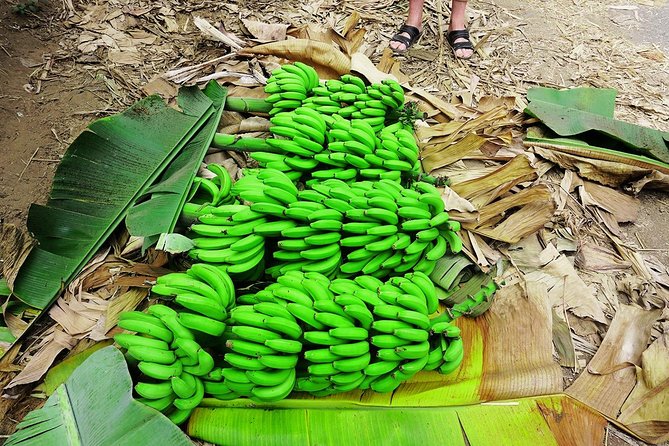
If available, you can buy fresh coconut water and organically grown local bananas at your own expense. I would keep a little cash ready for these small purchases, although the tour information does not specify prices or payment methods. Fresh coconut water is a fitting refreshment in the heat, and the bananas give you a direct taste of what is grown nearby.
The main limitation here is the level of contact with the plantation itself. You walk through the fields with the guide, but a farmer may not be available to speak with you. If you want a working-farm tour with detailed agricultural demonstrations, this may feel light. If you want a compact introduction to Santiago’s food-growing areas, the stop does the job without taking over the whole day.
Wear shoes that are comfortable for walking through fields. The supplied details do not specify the ground conditions, so practical footwear is a better choice than sandals you would normally wear around Praia.
São Lourenço dos Órgãos and the welcome from Mama Luisa and Gustavo
From Santa Cruz, you continue to São Lourenço dos Órgãos, also referred to as Orgãos. Here the pace changes. Instead of looking at crops from a path, you spend around two hours with a local family and take part in a food workshop.
Mama Luisa and her husband, Gustavo, are the hosts named in the tour experience. Their warm welcome is one of the strongest reasons to choose this outing. You are not merely served a prepared dish and sent on your way. You get a chance to cook alongside local people and see how hospitality works in a family setting.
The included breakfast is part of this visit. The tour also includes the workshop for cuscuz and fidjós, so this is the section where the food element becomes more than a tasting. You learn to prepare cuscuz, a traditional cake made from cornmeal, and fidjós, a sweet treat made with banana and wheat.
The workshop gives you something a standard restaurant meal cannot. You learn the ingredients, the basic preparation, and the place these foods hold in Cape Verdean home cooking. You may not leave with a formal recipe card, but you should leave with a better sense of how local food is made and shared.
The phrase La Morabeza refers to the Cape Verdean spirit of warmth and hospitality. You experience that idea here through the family visit, rather than through a museum display or a scripted performance. For me, this is the most personal part of the tour.
The two-hour stay also keeps the schedule from feeling rushed. You have time to watch, ask questions, help with the cooking, and eat. Since the group is capped at eight, you should have a better chance of participating instead of standing behind a crowd.
Rum, sugarcane, and the flavor of Santiago
The experience also includes a visit to a rum distillery, with tastings and sugarcane products. Rum-making is an important part of Cape Verde’s food and drink culture, and the distillery adds another practical look at how local crops become finished goods.
The supplied schedule places the rum visit within the wider day, but it does not give a separate duration for the distillery. Your guide may combine it with the agricultural or local-life portion of the outing. The key point is that you are not only looking at sugarcane in the field. You also learn about its role in drink-making and sample the result.
Tastings are included as part of the visit, while personal expenses are not. If you want to buy additional bottles, snacks, or drinks, those purchases would be separate. The tour does not include lunch, so do not treat the included breakfast and tastings as a full-day meal plan.
If you do not drink alcohol, the distillery can still be useful for the sugarcane story and production process, but the tasting will naturally be less important to you. The listing does not specify nonalcoholic alternatives, so you should not assume that they are provided.
More Local Life Tours in Praia:
- Praia: Guided Historic Walking Tour & Lunch with Locals
★ 4.5 · 8 reviews - The origen of Capeverdean People
★ 5.0 · 4 reviews - Boa Vista Reef Snorkeling in Gatas Bay / Aperitif with Locals
★ 4.4 · 46 reviews - From Tarrafal: Serra to Principal Hike & Lunch with locals
★ 4.7 · 41 reviews
What the public transport element adds
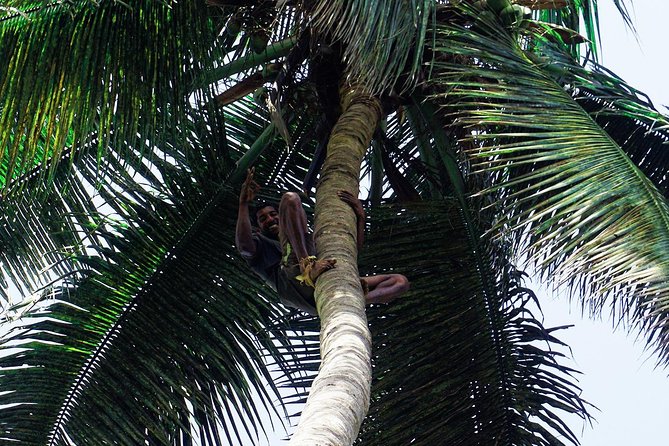
Many excursions show you local life from behind a vehicle window. This one makes room for public transport, which gives you a different view of Cape Verde.
You see how residents move around, how towns connect, and how the day feels outside the main tourist zone. That can be more revealing than another scenic viewpoint. It also keeps the experience tied to ordinary life rather than making every moment feel arranged for visitors.
There is a tradeoff. Public transport can be less predictable than a private car, and the tour details do not promise a specific route or vehicle. If you need a tightly controlled schedule, this may add a little uncertainty. If you want a more grounded outing and can accept a less polished rhythm, it is a worthwhile feature.
The tour is described as suitable for most people and near public transportation. No detailed mobility information is provided, so anyone with specific accessibility needs should confirm the practical arrangements with Bu Country Tours before booking.
The return through rocks and valleys
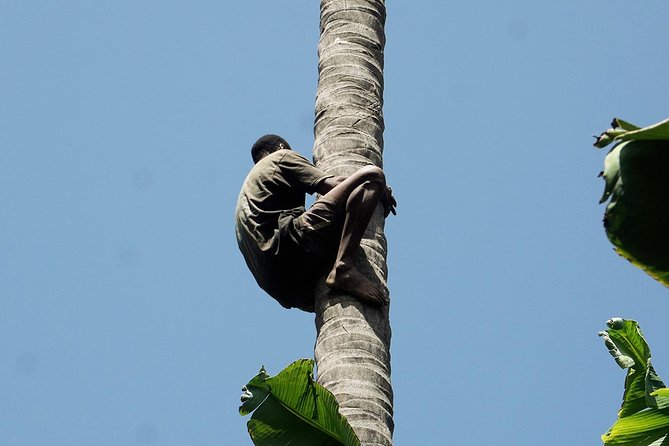
After the family workshop, you return toward Praia by a scenic route through rocks and valleys. Your guide narrates local history during the drive and points out features along the way.
This final section is not another major attraction, and that is fine. It gives you a quiet transition back to the capital after the food workshop. You get a last look at Santiago’s interior instead of retracing the morning route without explanation.
The total duration is about four hours. With roughly 30 minutes to Santa Cruz, an hour at the plantation, two hours with the family, and about 30 minutes back, the day has a clear shape. The distillery and public transport elements fit into that wider plan, though the exact timing is not broken out.
Because the tour ends back at your accommodation, it works well on a morning when you want another plan later in the day. Still, allow some flexibility. Small-group transport and local visits do not always run with the precision of a museum timetable.
Is $76.57 a fair price?
At $76.57 per person, this is not the cheapest way to spend four hours around Praia. But the price covers several separate services: pickup and drop-off, transportation, a guide, breakfast, a plantation visit, a family cooking workshop, and rum tastings.
The strongest value comes from the personal elements. A simple plantation drive would not justify the full price on its own. The family visit, hands-on food preparation, local transport, and distillery experience make the outing broader and more useful.
You also benefit from the maximum group size of eight. A private tour would cost more, but a large coach group could make the cooking session awkward and reduce your chance to ask questions. This sits in the middle: shared cost, but with enough room for individual attention.
Lunch and personal expenses are excluded. Plan for your own midday meal after returning to Praia, and carry money if you want coconut water, bananas, or anything else along the way. Group discounts are offered, which may improve the value if you are booking for several people.
The tour is often booked about 10 days ahead. That suggests you should not leave it until the last morning of your stay, especially if you want a particular date. Confirmation is received at booking, and free cancellation is available until 24 hours before the start time. Cancellations within 24 hours are not refunded, and late changes are not accepted.
Who will enjoy this four-hour outing?
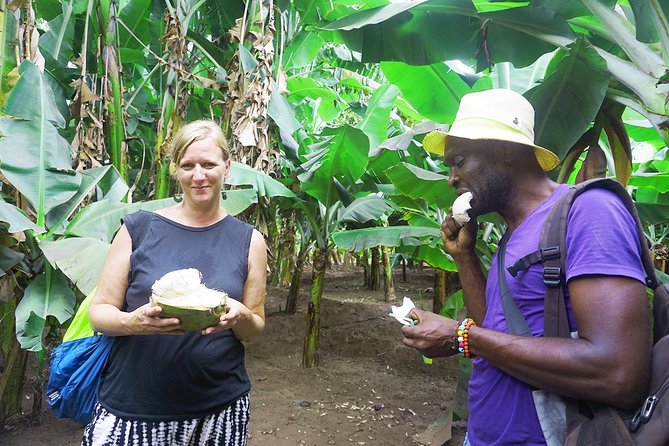
I would recommend it most strongly if you want to meet local people and learn through food. The family workshop is a better match for you than a tour made entirely of viewpoints or monuments.
It also suits first-time visitors to Santiago who want a taste of the island beyond Praia without committing to a full-day trip. You get agriculture, rum, local transport, cooking, and scenery in one compact outing.
Families and small groups may appreciate the manageable size, though the tour details do not specify a minimum age or child arrangements. Food-focused visitors should find plenty to enjoy, especially if you like learning how everyday dishes are prepared.
You may want to choose another experience if your priority is a detailed plantation study, a long distillery tour, or a substantial lunch. The plantation walk is relatively brief, the distillery timing is not separately stated, and lunch is not included.
French-speaking visitors may also find this tour appealing. One experience was led in French, and the guide was praised for explaining Cape Verde’s history. Guide language can vary by date, so confirm your preferred language when booking rather than assuming it is guaranteed.
Should you book it?
Book this tour if you want real contact with local food and family life more than a checklist of major sights. The banana plantation is a pleasant opening, but the visit with Mama Luisa and Gustavo is the part most likely to stay with you.
The $76.57 cost is reasonable for the transport, breakfast, small group, cooking workshop, and tastings. Just set your expectations correctly: this is a friendly cultural outing, not an intensive farm course or a full-day food tour.
I would choose it early in a Praia stay, then keep the afternoon open for lunch and your own plans. With free cancellation up to 24 hours ahead, you have some flexibility. For a compact, personal look at Santiago, this is a strong choice.
FAQ
Where does the tour start?
Pickup is offered from your accommodation in Praia. The scheduled start time is 9:00 a.m.
How long does the experience last?
The tour lasts approximately four hours.
What places does the tour visit?
The route includes Praia, Santa Cruz, and São Lourenço dos Órgãos, also called Orgãos.
Is transportation included?
Yes. Pickup and drop-off, as well as transportation during the experience, are included.
How large is the group?
The maximum group size is eight travelers.
What food activities are included?
Breakfast and a workshop for preparing cuscuz and fidjós are included.
Is lunch included?
No. Lunch and personal expenses are not included.
Can I try rum during the tour?
Yes. The experience includes a visit to a rum distillery with tastings and sugarcane products.
What is the cancellation policy?
You can cancel for a full refund up to 24 hours before the experience starts. Cancellations or changes made within 24 hours are not accepted for a refund.
Recently listed on Praia
- Santiago Island: Private Airport Transfer to Praia or Vice Versa★ 5.0 · 3 reviews
- Hiking Águas Belas Cave★ 4.5 · 3 reviews
- Best of Santiago Island: Cidade Velha, Workshop & Tarrafal Beach Tour★ 4.5 · 3 reviews
- Santiago island & Full Day Island★ 5.0 · 2 reviews
- Santiago Island: Trek from Serra Malagueta to Rabelados Community★ 5.0 · 2 reviews
- Tarrafal Beach Tour: Boat Trip to the Lighthouse, Snorkel & BBQ Lunch★ 5.0 · 5 reviews
- Hiking Serra Malagueta Natural Park★ 5.0 · 2 reviews
- Hikking Natural Park/Serra Malagueta★ 4.0 · 4 reviews
Local Life & Culture, compared.
Serra Malagueta: Principal Valley Hike & Lunch with Locals
Read our review →
Boa Vista Reef Snorkeling in Gatas Bay / Aperitif with Locals
Read our review →
ALL-INCLUSSIVE Cabrer Journey-Live a day like a Cabrer-BoaVista
Read our review →
Like Locals: Praia and Cidade Velha Tour + Local Pontxi Tasting
Read our review →
Browse the lists this tour appears in