
Reviewed · SCUBA DIVING
Half-Day Diving in Sal
The real adventure begins below the waves. This four-hour Sal excursion takes you to coral-covered volcanic walls, caves, shipwrecks, and fish-filled waters where tropical and Mediterranean marine life meet. I like the small group limit of seven divers or fewer, since it gives your guide more time to watch your comfort and experience level.
I also like that tanks, weights, a belt, hotel transport, and a professional guide are included. The main catch is worth noting early: rental equipment costs an extra 20 euros, and rough sea conditions can make the boat ride or first descent uncomfortable for some people.
The schedule is tidy and useful for a beach holiday. You meet at Cabo Verde Diving Aquarium in Santa Maria around 8:30 a.m., make two separate descents with two tanks, and return to base around 1 p.m. The current score of 4.8 from 135 ratings, with 96 percent recommending the trip, points to a well-liked operation, though the sea is still the sea, and one difficult outing can feel very difficult indeed.
In This Review
- Key points to know before booking
- Meeting the team at 8:30 a.m. in Santa Maria
- The first 40 to 60 minutes: Sal’s deeper sites
- The second session, shallower and more relaxed
- What the small group changes underwater
- Equipment, certification, and safety details
- Is $109.34 a fair price?
- Who will enjoy this Sal excursion most?
- Practical ways to make the morning better
- Should you book Half-Day Diving in Sal?
- FAQ
- Where does the activity start?
- How long does the tour last?
- How many underwater sessions are included?
- Is hotel pickup included?
- Is scuba equipment included?
- Do I need proof of certification?
Key points to know before booking
- Two separate tanks: The first underwater session can reach 18 to 35 meters, while the second stays shallow at a maximum of 18 meters.
- Small groups: Up to seven divers are normally accommodated, with guide numbers adjusted to experience levels.
- Marine life and wrecks: You might see shoals of fish, stingrays, turtles, nurse sharks, pufferfish, coral walls, caves, and shipwrecks.
- Equipment costs extra: Tanks, weights, and a belt are included, but rental gear is an additional 20 euros at the center.
- Free transport with a limit: Hotel pickup and return are free when your accommodation is more than a 10-minute walk from the center.
- Good safety checks: You need proof of certification for certified scuba, and everyone completes a health questionnaire before entering the water.
Meeting the team at 8:30 a.m. in Santa Maria
The morning starts at Cabo Verde Diving Aquarium in Santa Maria. If your hotel is farther than a 10-minute walk from the center, pickup and return are provided at no charge. If you are staying close by, you may simply walk over, which keeps the morning simple.
Plan to arrive ready for a fairly active morning. You will meet your instructor, sort out equipment, complete the required health questionnaire, and listen to the safety briefing before heading toward the boat or launch point. The exact order can vary with the sea and the day’s sites, but the center’s approach is clearly built around preparation rather than rushing people into the water.
That matters most if you are new to scuba. One first-time participant described the instruction as clear and reassuring, with the instructor staying nearby and checking that everything was fine in the ocean. That kind of close attention is exactly what you want when you are still thinking about breathing, buoyancy, and where your hands should be.
The group may include up to five or six other people, with one guide assigned as needed. The stated maximum for the wider activity is 10 participants, but the normal scuba group is limited to seven or fewer. Ask how groups will be divided if several experience levels are present. A smaller group usually makes it easier to ask questions and stay with your guide.
More Scuba Diving in Sal:
- Discover Scuba Diving in Sal
★ 5.0 · 182 reviews - Santa Maria: Discover Scuba Diving
★ 4.9 · 81 reviews - Double Diving in Sal Island – Half Day
★ 5.0 · 38 reviews
The first 40 to 60 minutes: Sal’s deeper sites
The first session usually lasts 40 to 60 minutes. Depending on the site and your certification, it may reach between 18 and 35 meters. This is the more ambitious part of the morning, so you should be comfortable with your own qualification and recent experience before booking.
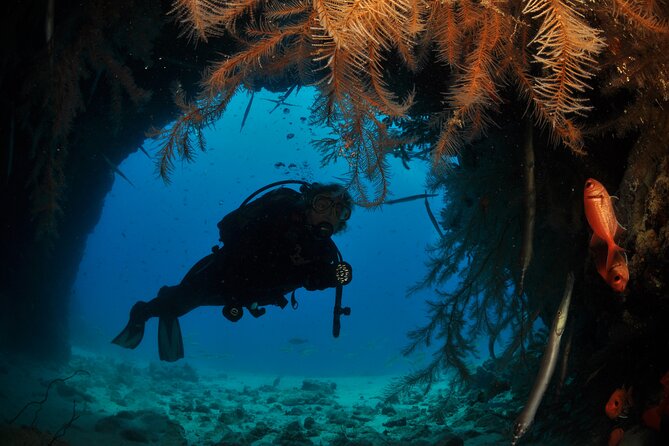
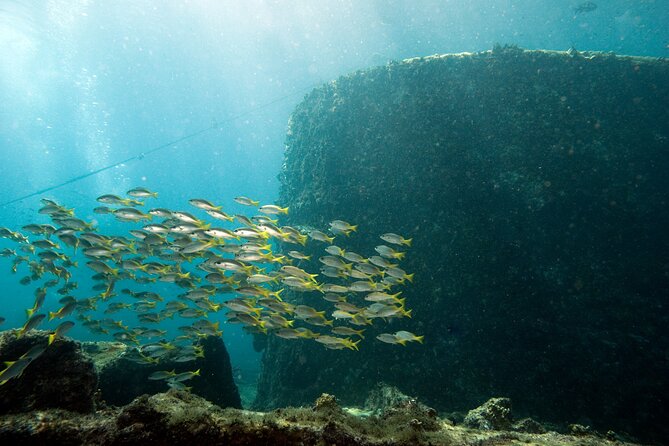
At these depths, Sal’s volcanic underwater scenery becomes the main attraction. You may pass coral-covered rock walls, swim near caves, and explore wreck sites. The water supports both tropical and Mediterranean species, so the scenery is not limited to one type of fish or one familiar reef setting.
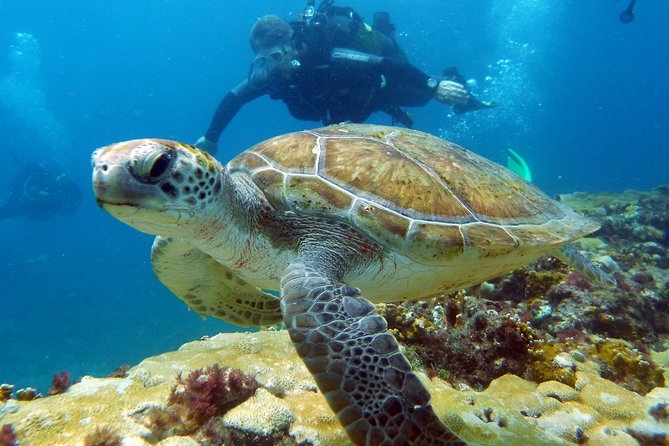
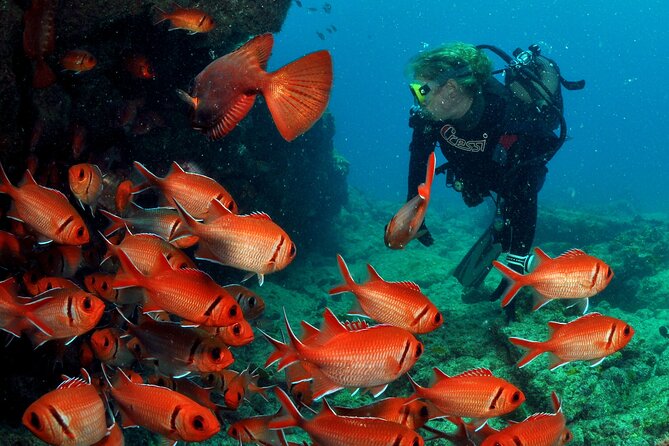
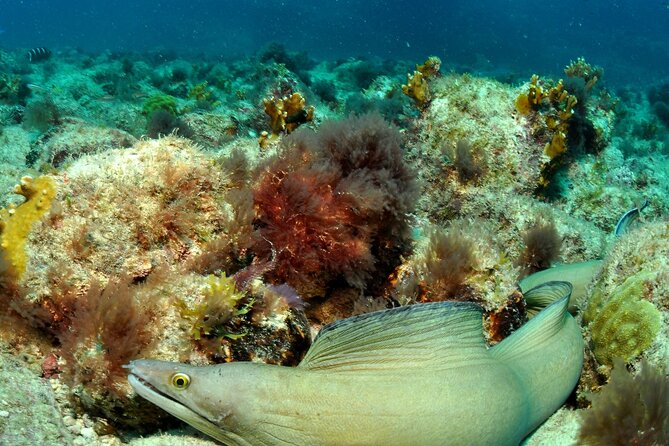
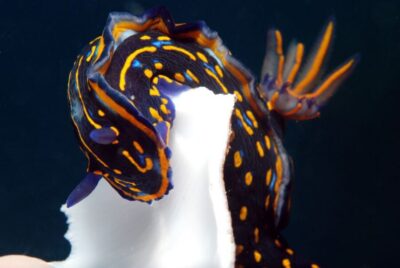
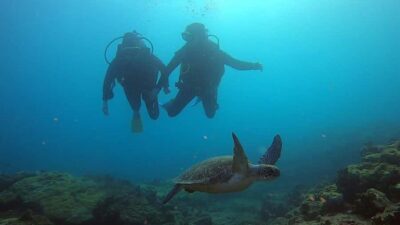
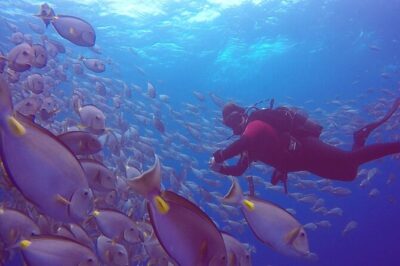
The strongest wildlife possibilities include turtles, nurse sharks, stingrays, and pufferfish. These sightings are never guaranteed, of course, but the mix of rocky structure, wrecks, and open water gives the guide several kinds of habitat to work with. Shoals of smaller fish can provide much of the action, while a turtle or ray may turn a pleasant session into the highlight of your holiday.
The wrecks add a sense of place that a standard reef swim does not always provide. You are not only looking at fish in open water. You are following the contours of an object that has become part of the marine environment, with fish and coral using its structure for shelter.
The possible drawback is the sea state. One unhappy participant reported very rough conditions and severe sickness at the site, along with a distressing overall experience. That account should not erase the many positive safety comments, but it is a useful warning: if you are prone to seasickness, ask about conditions before departure and bring only the medication your doctor has cleared for use with scuba.
The second session, shallower and more relaxed
After the first tank, you switch to a second tank for a shallower session. This one reaches no more than 18 meters, which can suit people who prefer a calmer pace or who want to spend more time looking closely at the scenery rather than chasing depth.
The second location may offer a different view of Sal’s underwater world. Volcanic walls, caves, coral growth, and fish can look quite different in shallower water, especially as the guide adjusts the route to conditions and the group’s level. The experience is not simply a repeat of the first session with a fresh tank.
A two-tank format also gives you useful variety. The first outing may focus on depth, a wreck, or larger marine features. The second can give you more time for smaller details and relaxed observation. You will still need to follow the guide’s instructions and stay within the limits set for your certification.
Each session commonly lasts 40 to 60 minutes, but the full morning includes transport, equipment preparation, briefings, and movement between sites. The advertised four-hour duration is therefore realistic for the complete activity, not four hours spent underwater.
What the small group changes underwater
A group of seven or fewer is a practical advantage, not just a marketing detail. Your guide can keep a closer eye on air use, buoyancy, spacing, and comfort. If you are a beginner, that can reduce the feeling that you are holding up a large group.
The arrangement also helps with wildlife viewing. You will not have as many people crowding around a turtle, ray, or wreck feature. You still need patience and good underwater manners, but a smaller group gives you a better chance to observe without a noisy cluster of fins and cameras.
The center presents itself as a family-style operation where divers are treated as friends. That friendly tone comes through in the strongest feedback, which praises the staff, clear briefings, and helpful boat guides. Stephanie is specifically praised for combining humor with serious attention to safety, a useful balance when people are excited but still need to follow rules.
Do keep expectations sensible. A small group does not mean private guiding, and one instructor may still be responsible for several people. The guide assignment can change according to experience level, so tell the center honestly whether you are new, recently certified, or accustomed to deeper water.
A few more Sal trips to put side by side
- Sal: Island Experience Tour with a Certified Local Guide
★ 4.8 · 3,249 reviews - Sal: All-Inclusive Salt Lake, Blue Eye and Shark Bay Tour
★ 4.7 · 2,033 reviews - Experience on Sal Island with native and certified guide (including sharks)
★ 5.0 · 1,166 reviews - From Sal Island: Blu eye, Salt lake, Lemon Sharks & Palmeira
★ 4.6 · 1,003 reviews
Equipment, certification, and safety details
The price includes tanks, weights, and a belt. It does not include the rest of your rental equipment, which costs an extra 20 euros at the center. Confirm what that fee covers before you arrive, especially if you need a full set rather than only selected items.
Certified scuba requires proof of certification from every participant who wants to take part. Bring the appropriate evidence with you, since the center cannot simply take your word for a qualification that sets the limits for depth and supervision.
Everyone must complete a health questionnaire before the activity. Conditions such as asthma or heart problems may prevent participation, so consult your doctor if you have a relevant medical concern. This is not a minor formality. Underwater pressure and physical exertion make honest answers important.
You should also avoid scheduling this outing within 48 hours of a flight. That rule matters for your return plans as much as your arrival day. If you are flying home from Sal soon, leave enough time between the final session and your flight rather than trying to squeeze the activity into your last morning.
The tour requires good weather. If poor conditions force cancellation, you can accept another date or receive a full refund. Conditions can change quickly at sea, so this policy is a useful safety measure rather than an inconvenience.
Is $109.34 a fair price?
At $109.34 per person, this is not the cheapest way to spend a morning in Sal, but the value is reasonable if you need a guide and transport. You receive two tanks, weights, a belt, professional supervision, and hotel pickup and return when the distance rule applies.
The price is less attractive if you already own all your equipment and can reach the center easily. You will still pay for the guided service, but the extra 20 euro equipment charge means the advertised figure is not the complete cost for a renter. Add that fee to your budget before comparing it with other local operators.
The two separate sessions help justify the cost. You are not paying for a single short introduction, and the first location can reach 35 meters while the second provides a shallower change of pace. The limited group size is another part of the value, especially for new or less confident scuba participants.
I would consider the price fair for visitors who want a managed outing rather than arranging tanks, transport, guides, and sites themselves. It is particularly useful for a short stay, since the morning schedule leaves the afternoon free for Santa Maria or the beach.
Who will enjoy this Sal excursion most?
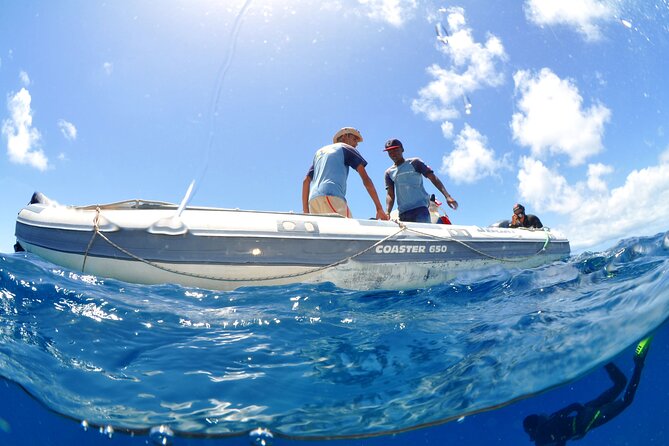
This outing suits certified divers who want to see Sal’s volcanic formations, wrecks, and marine life without committing to a full day at sea. The two-session format gives you a solid morning of activity while preserving time for other plans.
It can also suit a first-time participant if the center accepts the person’s experience and medical status for the chosen program. The positive first-time account points to careful instruction and close monitoring, but beginners should be open about their nerves and should not assume that a calm briefing guarantees calm water.
Families may appreciate the small-group atmosphere, but age and ability still matter. The supplied information includes a 13-year-old participant, yet it does not specify a minimum age or child policy. Contact the center directly before booking for a minor.
You may want to reconsider if you are highly prone to seasickness, have a medical condition that could affect scuba, or dislike changing sea conditions. The rough-water account is a reminder that even a friendly, safety-minded center cannot control the Atlantic.
Practical ways to make the morning better
Keep your morning free until the return to base at about 1 p.m. The activity is scheduled for four hours, but sea conditions, group needs, and site changes can affect the exact timing.
Bring proof of certification, and tell the team your recent experience honestly. If you have not been underwater for a long time, say so before the group leaves. The guide can then judge which site and depth make sense for you.
Ask about the equipment fee when you arrive. Tanks, weights, and a belt are included, but other rental equipment is not. This is the one cost most likely to surprise you if you read only the headline price.
Do not plan to fly within 48 hours after the session. Also remember that the activity is weather dependent, so avoid building an important same-day connection around the advertised return time.
The center’s environmental approach is another positive. The team places importance on safety, care for the marine setting, and respect for the local communities where it operates. That does not change the sea conditions, but it gives the outing a responsible framework.
Should you book Half-Day Diving in Sal?
I would book this for a certified diver who wants a guided morning with wrecks, caves, volcanic walls, and a real chance of seeing turtles, rays, sharks, and reef fish. The small groups, included tanks and weights, friendly instruction, and free transport make it a practical choice for many visitors staying in Santa Maria.
I would pause before booking if the extra 20 euro equipment cost affects your budget, if you are uncomfortable in rough water, or if your flight is within 48 hours. Ask about conditions and group arrangements before you pay.
For everyone else, this is a well-priced two-tank introduction to Sal’s underwater side. The strongest reasons to choose it are the personal supervision and the variety of sites, not simply the number of minutes underwater.
FAQ
Where does the activity start?
It starts at Cabo Verde Diving Aquarium in Santa Maria, Sal, at approximately 8:30 a.m.
How long does the tour last?
The full activity takes about four hours. You normally return to the base around 1 p.m.
How many underwater sessions are included?
The experience includes two sessions using two separate tanks. The first may reach 18 to 35 meters, and the second has a maximum depth of 18 meters.
Is hotel pickup included?
Yes. Hotel pickup and return are provided free when the distance from your accommodation to the center is more than a 10-minute walk.
Is scuba equipment included?
Tanks, weights, and a belt are included. Other rental equipment is not included and costs an extra 20 euros at the center.
Do I need proof of certification?
Yes. Anyone taking part in a certified scuba session must provide evidence of certification. All participants must also complete a health questionnaire before the activity.
Recently listed on Sal
- Windsurf Lessons★ 5.0 · 2 reviews
- Turtle Experience in Sal island★ 4.0 · 5 reviews
- Secrets of Sal Island 4×4 Tour with Pedra da Lume Salt Lake★ 4.5 · 6 reviews
- Private Sal island: Pedra de Lume Village, Salt Lake & Shark Tour★ 5.0 · 2 reviews
- Sal island: Private Santa Maria City Tour, Street Art and Tapas★ 5.0 · 6 reviews
- Sal Island All-inclusive Adults-only Catamaran Cruise★ 5.0 · 3 reviews
- Sal Island: Guided Full-Day Highlights Tour with Lunch★ 5.0 · 5 reviews
- 4×4 Off Road Full-Day Private Tour – Sal Island Hidden Secrets★ 5.0 · 3 reviews
Scuba Diving, compared.
Browse the lists this tour appears in